"Cut and Run"
"Stay the Course"
"This is a 'mood' election like 1994, and voters are in a bad mood"
"A Speaker Pelosi will try to impeach the president and hand out subpoenas daily."
"Do nothing Congress"
"Our nation will be weaker, and the enemies of our nation will be stronger"
"Scandal, scandal, scandal"
"Iraq, Iraq, Iraq"
"It's the economy, stupid"
Sunday, October 22, 2006

Analysis: Will the release of this verdict focus voters on security issues and impact the election? (please try to limit conspiracy theories!)

A verdict against Saddam Hussein will be announced Nov. 5
Oct 16, 10:39 AM EDT
Brother of Saddam Prosecutor Is Killed
By QASSIM ABDUL-ZAHRA Associated Press Writer
BAGHDAD, Iraq (AP) -- The brother of the top prosecutor in the second trial of Saddam Hussein was shot dead in front of his wife at his home in the capital Monday, according to a key official charged insuring no former members of the Saddam regime hold positions of authority.
Imad al-Faroon died immediately after the shooting at his home in west Baghdad, Dr. Ali al-Lami, head of the government De-Baathification Committee, told The Associated Press.
Al-Faroon's brother is chief prosecutor Muqith al-Faroon, who is leading the Saddam prosecution on charges of crimes against humanity in his alleged killing of thousands of Kurds during the Iran-Iraq war.
A verdict against Saddam Hussein and seven co-defendants charged with crimes against humanity in connection with an anti-Shiite crackdown in the 1980s will be announced Nov. 5, a senior court official said on Monday.
Sentences for those found guilty will be issued the same day, chief investigating judge Raid Juhi told The Associated Press.
The former Iraqi leader could be hanged if convicted. However, he could appeal the sentence to a higher, nine-judge court. His co-defendants include his former deputy, Taha Yassin Ramadan, and his half-brother and former intelligence chief Barzan Ibrahim.
Analysis: What impact will campaign tactics have in the last two weeks of this election cycle?
Rove Road-Tests Tougher Attack on Democrats
By Michael Abramowitz and Zachary A. GoldfarbSunday, October 22, 2006
BUFFALO, Oct. 21 -- Republicans have been promising they would ratchet up the rhetoric against Democrats in the final two weeks of the fall campaign, and the man President Bush called "The Architect" of his political campaigns offered a preview of what they have in mind on Friday night.
Appearing in support of embattled GOP Rep. Thomas M. Reynolds (R-N.Y.), Karl Rove offered biting jibes against House Democratic leader Nancy Pelosi (Calif.), took a shot at the American Civil Liberties Union (ACLU) and asserted that Democratic policies would leave the country weaker.
"You can't say I want to win the war but not be willing to fight the war," said Rove, Bush's top political adviser. "And if leading Democrats have their way, our nation will be weaker and the enemies of our nation will be stronger. And that's a stark fact, and it's the reason that this fall election will turn very heavily on national security."
Officially, Rove was speaking at the annual dinner for the Erie County Republican Party, but in many ways, the appearance was a show of support for Reynolds, the chairman of the National Republican Campaign Committee, who is in danger this fall after questions about his role in responding to the Mark Foley page scandal.
Sen. John McCain (R-Ariz.) was supposed to be the speaker at the dinner and rally, but he canceled, pleading a scheduling conflict, the Buffalo News said. McCain did speak to the rally by telephone, praising Reynolds as "one of my heroes."
Rove stepped in at dinner and used his speech to road-test new lines of attack on the Democrats. The basic themes -- that voters face a stark choice between the parties on taxes and terrorism -- have been a Bush standard. But Rove, who once claimed liberals preferred "therapy" to war against terrorists, delivered them with an acerbity not seen from his boss.
For instance, he needled congressional Democrats for voting against a GOP plan to try terrorist suspects at the Guantanamo Bay prison in Cuba. Many Democrats said the plan violated basic rights, but Rove rejected that. "You need to have the ability to try these people without worrying about the ACLU showing up saying, 'Wait a minute, did you Mirandize them when you found them on the battlefield,' " he said. "With all due respect, I don't happen to remember that in World War II, that when we captured Nazis and Japanese and took them to camps, that the first thing we did was provide them legal aid."
He also went after the would-be House speaker for voting against renewing the USA Patriot Act, the warrantless wiretapping program and the war in Iraq. "With a record like that, you can see why Nancy Pelosi wouldn't want this election to be about national security," Rove said.
Pelosi spokesman Brendan Daly responded, "Clearly, the White House is getting desperate to keep their rubber-stamp Republican Congress."
Monday, October 09, 2006
Saturday, September 30, 2006


Analysis: Who do you think will control the House and/or Senate after the November elections?
FOXNEWS.COM HOME > POLITICS
Former Rep. Mark Foley Leaves D.C. in Hurry After E-Mail Scandal
Saturday, September 30, 2006
WASHINGTON — This time there were no tortured explanations, no heels dug in, no long, slow drip of revelation or fight for redemption.Former Rep. Mark Foley Leaves D.C. in Hurry After E-Mail Scandal
Saturday, September 30, 2006
Republican Rep. Mark Foley, of Florida, just up and quit after his e-mails expressing undue interest in a 16-year-old male page were exposed to the nation. Less than six weeks from a tough election for Republicans who control an already ethically tainted Congress, the more common stick-it-out approach to scandal was cast aside.
"Resigning leaves your attackers nowhere to go," said Eric Dezenhall, a crisis-management consultant. "If this had dragged on, it could have sucked Republicans into the vortex of scandal."
Monday, September 11, 2006
Analysis: What impact will focusing on fighting terrorism have in the midterm elections?
WASHINGTON (CNN) -- President Bush told the American people Monday night that the country faces "a struggle for civilization" as it fights the war on terrorism sparked by the 9/11 attacks five years ago.
In an address from the Oval Office, the president stressed the necessity of victory, tying together conflicts from Afghanistan to Iraq to Lebanon as a "struggle between tyranny and freedom" that rivaled World War II.
"The war against this enemy is more than a military conflict. It is the decisive ideological struggle of the 21st century and the calling of our generation," he said. "Do we have the confidence to do in the Middle East what our fathers and grandfathers accomplished in Europe and Asia?" Bush asked.
"If we do not defeat these enemies now, we will leave our children to face a Middle East overrun by terrorist states and radical dictators armed with nuclear weapons," Bush said. "We are in a war that will set the course for this new century and determine the destiny of millions across the world."
"We are fighting to maintain the way of life enjoyed by free nations, and we are fighting for the possibility that good and decent people across the Middle East can raise up societies based on freedom and tolerance and personal dignity," Bush said. "By standing with democratic leaders and reformers, by giving voice to the hopes of decent men and women, we are offering a path away from radicalism."
Friday, August 18, 2006
Opinion: Does the warrantless surveillance program violate the Bill of Rights?

By SARAH KARUSH, Associated Press Writer Fri Aug 18, 6:56 AM ET
DETROIT - A federal judge decision's to strike down
President Bush's warrantless surveillance program was the first ruling over its legality, but surely not the last.
U.S. District Judge Anna Diggs Taylor in Detroit ruled that the program violated the rights to free speech and privacy, as well as the separation of powers enshrined in the Constitution.
The administration said it would appeal to the 6th U.S. Circuit Court of Appeals in Cincinnati.
"We're going to do everything we can do in the courts to allow this program to continue," Attorney General Alberto Gonzales said at a news conference in Washington.
Taylor was the first judge to rule on the legality of the National Security Agency's program, which the White House says is a key tool for fighting terrorism that has already stopped attacks.
"Plaintiffs have prevailed, and the public interest is clear, in this matter. It is the upholding of our Constitution," Taylor wrote in her 43-page opinion.
White House press secretary Tony Snow said the Bush administration "couldn't disagree more with this ruling." He said the program carefully targets communications of suspected terrorists and "has helped stop terrorist attacks and saved American lives."
Taylor ordered an immediate halt to the program, but the government said it would ask for a stay of that order pending appeal.
The American Civil Liberties Union, which brought the suit, said it would oppose a stay but agreed to delay enforcement of the injunction until Taylor hears arguments Sept. 7.
The ACLU filed the lawsuit in January on behalf of journalists, scholars and lawyers who say the program has made it difficult for them to do their jobs. They believe many of their overseas contacts are likely targets of the program, which monitors international phone calls and e-mails to or from the U.S. involving people the government suspects have terrorist links.
The ACLU says the 1978 Foreign Intelligence Surveillance Act, which set up a secret court to grant warrants for such surveillance, gave the government enough tools to monitor suspected terrorists.
The government argued the NSA program is well within the president's authority but said proving that would require revealing state secrets. The ACLU said the state-secrets argument was irrelevant because the Bush administration already had publicly revealed enough information about the program for Taylor to rule. The administration has decried leaks that led to a New York Times report about the existence of the program last year.
Taylor, a Carter appointee, said the government appeared to argue that the program is beyond judicial scrutiny. "It was never the intent of the framers to give the president such unfettered control, particularly where his actions blatantly disregard the parameters clearly enumerated in the Bill of Rights," she wrote. "The three separate branches of government were developed as a check and balance for one another."
ACLU executive director Anthony Romero called Taylor's opinion "another nail in the coffin in the Bush administration's legal strategy in the war on terror."
While siding with the ACLU on the surveillance issue, Taylor dismissed a separate claim by the group over NSA data-mining of phone records. She said not enough had been publicly revealed about that program to support the claim and further litigation would jeopardize state secrets.
___
Associated Press writers Katherine Shrader in Washington and Jeremiah Marquez in Los Angeles contributed to this report.
Saturday, August 05, 2006
Analysis: What will the impact of fighting between Israel and Hezbollah be on U.S. politics? Will the U.S. government continue to get more involved?
Israeli commandos renew attack on Tyre
AP - Via Yahoo.com
TYRE, Lebanon - Israeli naval commandos battled with Hezbollah in the southern port city of Tyre early Saturday (8-5-06), while Israeli air raids killed at least eight people in multiple strikes across Lebanon and a Hezbollah rocket barrage killed three in northern Israel. After days of negotiations, the U.S. and France reached agreement Saturday (8-5-06) on a U.N. Security Council resolution aimed at getting a cease-fire, U.S. Ambassador John Bolton said.
Opinion: Should the estate tax be cut? Why or Why not?
GOP Bid On Wages, Estate Tax Is Blocked
Democrats Prevent Vote on Senate Bill
By Charles BabingtonWashington Post Staff WriterFriday, August 4, 2006; Page A01
Senate Democrats blocked a Republican bid to combine a tax cut for the wealthy with a wage increase for the working poor, adding a volatile economic issue to this fall's congressional campaigns.
GOP leaders fell three votes short of the 60 needed to cut off debate and bring the package to the Senate floor, where it was considered certain to pass on a simple-majority vote. Republicans said Democrats will pay a price in November, contending that most Americans support the bill's call for an increase in the minimum wage and deep cuts in the estate tax. But Democrats said rich Americans have received enough breaks from the Bush administration and the GOP-led Congress. Voters, they said, will see the Republican-backed bill as a ploy to further enrich upper-income families while trying to usurp the Democrats' role as champions of the working poor.
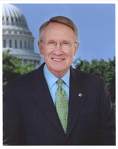
Under the bill, "8,100 of the wealthy and well-off hit the jackpot, while millions of working families get $800 billion in [federal] debt," said Minority Leader Harry M. Reid (D-Nev.), who led the opposition to the measure.
The official Senate tally was 56 to 42 in favor of proceeding to a vote on the wage-and-tax bill, short of the 60 required. Senate Majority Leader Bill Frist (R-Tenn.) supported the package but switched his vote -- reducing the final number to 56 from 57 -- to enable him to seek a reconsideration later. Republicans Lincoln D. Chafee (R.I.) and George V. Voinovich (Ohio) joined one independent and 38 Democrats -- including the two from Maryland -- in opposing the bill by backing the filibuster. Four Democrats and 52 Republicans -- including Virginia's two senators -- signaled their support for the bill by voting to limit debate.
Republican leaders in Congress have long wanted to eliminate or slash the taxes levied on estates left by wealthy people, but the Senate has repeatedly refused. Hoping to attract enough Democratic support, House leaders last week added a sweetener: the first increase in the federal minimum wage in nine years, plus an extension of several popular tax breaks for businesses. The House passed the complex measure -- dubbed "the trifecta" because of its three main facets -- and sent it to the Senate, which planned to vote before adjourning this weekend for the August break. Frist agreed to the deal, hoping that several Democrats could not resist a chance to raise the minimum wage, in three phases, to $7.25 an hour from the current $5.15. The bill would also have exempted from taxation all estates worth as much as $5 million -- or $10 million for a married couple -- and applied a 15 percent tax rate to inheritances above that threshold and up to $25 million. The value of estates exceeding $25 million would have been taxed at 30 percent.
Most congressional Democrats support raising the minimum wage and oppose cutting the estate tax. Most Republicans take the opposite view, although some from both parties support both proposals. Democrats said they will keep pushing to raise the minimum wage with no strings attached. GOP senators had practically dared Democrats to vote against the package with the minimum-wage increase. All but four Senate Democrats took the dare, heeding Reid's plea to deny Frist a victory as lawmakers go home to campaign. Republicans predicted that Democrats will regret their decision.
"I certainly wouldn't want to vote against this bill" and then face the voters, Sen. John E. Sununu (R-N.H.) said in an interview. Polls show overwhelming public support for raising the minimum wage and for eliminating "the death tax," he said. Voting against the package, he said, "is bad for the country, and bad politics, too." Sen. Mitch McConnell (R-Ky.) said all three elements of the bill could have survived simple-majority votes had they been allowed, and he accused the Democrats of being obstructionists. "How can we have bipartisanship in the Congress if Democrats won't take 'yes' for an answer?" he asked.
But Democrats expressed confidence that voters will see the package as a cynical effort to help wealthy GOP supporters by making the estate tax cut the price for a wage increase that the nation's lowest-paid workers deserve.
Democrats Prevent Vote on Senate Bill
By Charles BabingtonWashington Post Staff WriterFriday, August 4, 2006; Page A01
Senate Democrats blocked a Republican bid to combine a tax cut for the wealthy with a wage increase for the working poor, adding a volatile economic issue to this fall's congressional campaigns.
GOP leaders fell three votes short of the 60 needed to cut off debate and bring the package to the Senate floor, where it was considered certain to pass on a simple-majority vote. Republicans said Democrats will pay a price in November, contending that most Americans support the bill's call for an increase in the minimum wage and deep cuts in the estate tax. But Democrats said rich Americans have received enough breaks from the Bush administration and the GOP-led Congress. Voters, they said, will see the Republican-backed bill as a ploy to further enrich upper-income families while trying to usurp the Democrats' role as champions of the working poor.

Under the bill, "8,100 of the wealthy and well-off hit the jackpot, while millions of working families get $800 billion in [federal] debt," said Minority Leader Harry M. Reid (D-Nev.), who led the opposition to the measure.
The official Senate tally was 56 to 42 in favor of proceeding to a vote on the wage-and-tax bill, short of the 60 required. Senate Majority Leader Bill Frist (R-Tenn.) supported the package but switched his vote -- reducing the final number to 56 from 57 -- to enable him to seek a reconsideration later. Republicans Lincoln D. Chafee (R.I.) and George V. Voinovich (Ohio) joined one independent and 38 Democrats -- including the two from Maryland -- in opposing the bill by backing the filibuster. Four Democrats and 52 Republicans -- including Virginia's two senators -- signaled their support for the bill by voting to limit debate.
Republican leaders in Congress have long wanted to eliminate or slash the taxes levied on estates left by wealthy people, but the Senate has repeatedly refused. Hoping to attract enough Democratic support, House leaders last week added a sweetener: the first increase in the federal minimum wage in nine years, plus an extension of several popular tax breaks for businesses. The House passed the complex measure -- dubbed "the trifecta" because of its three main facets -- and sent it to the Senate, which planned to vote before adjourning this weekend for the August break. Frist agreed to the deal, hoping that several Democrats could not resist a chance to raise the minimum wage, in three phases, to $7.25 an hour from the current $5.15. The bill would also have exempted from taxation all estates worth as much as $5 million -- or $10 million for a married couple -- and applied a 15 percent tax rate to inheritances above that threshold and up to $25 million. The value of estates exceeding $25 million would have been taxed at 30 percent.
Most congressional Democrats support raising the minimum wage and oppose cutting the estate tax. Most Republicans take the opposite view, although some from both parties support both proposals. Democrats said they will keep pushing to raise the minimum wage with no strings attached. GOP senators had practically dared Democrats to vote against the package with the minimum-wage increase. All but four Senate Democrats took the dare, heeding Reid's plea to deny Frist a victory as lawmakers go home to campaign. Republicans predicted that Democrats will regret their decision.
"I certainly wouldn't want to vote against this bill" and then face the voters, Sen. John E. Sununu (R-N.H.) said in an interview. Polls show overwhelming public support for raising the minimum wage and for eliminating "the death tax," he said. Voting against the package, he said, "is bad for the country, and bad politics, too." Sen. Mitch McConnell (R-Ky.) said all three elements of the bill could have survived simple-majority votes had they been allowed, and he accused the Democrats of being obstructionists. "How can we have bipartisanship in the Congress if Democrats won't take 'yes' for an answer?" he asked.
But Democrats expressed confidence that voters will see the package as a cynical effort to help wealthy GOP supporters by making the estate tax cut the price for a wage increase that the nation's lowest-paid workers deserve.
Monday, July 24, 2006
Opinion: Should someone's gender be considered when voters decide who to vote for in the next presidential election?

In a recent CNN story about the Draft Condi movement, Condoleeza Rice was described as the "most popular current public official in the country." Yet she hasn't taken stances on many important issues which makes some conservatives wonder if she would be a good Republican candidate. Hillary Rodham Clinton is seen as a front runner in the Democratic primaries. Yet she has been careful not to come out too strongly against the Iraq war (a position at odds with many Democrats). Are these possible candidates for president bolstered by their gender? Should someone's gender be considered an attribute (positive or negative)? Would you vote for a candidate mainly because she's a woman, or does she have to match your political philsophy as well?

(incidentally, Dick Morris and Eileen McGann have written a book about this potential matchup. I haven't read it yet, but I hear that "Condi vs. Hillary: The Next Great Presidential Race" is a pretty good book.)
Wednesday, June 21, 2006
Opinion: Should competition in the marketplace determine wages, or should the current minimum wage be increased through legislation?
Senate nixes bid to raise minimum wage
WASHINGTON (AP) -- The Republican-controlled Senate smothered a proposed election-year increase in the minimum wage Wednesday, rejecting Democratic claims that it was past time to boost the $5.15 hourly pay floor that has been in effect for nearly a decade.
Wednesday, June 21, 2006; Posted: 6:15 p.m. EDT (22:15 GMT) WASHINGTON (AP) -- The Republican-controlled Senate smothered a proposed election-year increase in the minimum wage Wednesday, rejecting Democratic claims that it was past time to boost the $5.15 hourly pay floor that has been in effect for nearly a decade.
The 52-46 vote was eight short of the 60 needed for approval and came one day after House Republican leaders made clear they do not intend to allow a vote on the issue, fearing it might pass.
Sixty votes were required because the plan was proposed as an amendment to an unrelated defense bill.
The Senate vote marked the ninth time since 1997 that Democrats there have proposed -- and Republicans have blocked -- a stand-alone increase in the minimum wage. The debate fell along predictable lines.

"Americans believe that no one who works hard for a living should have to live in poverty. A job should lift you out of poverty, not keep you in it," said Sen. Edward M. Kennedy, D-Massachusetts (pictured at right). He said a worker paid $5.15 an hour would earn $10,700 a year, "almost $6,000 below the poverty line for a family of three."
Republicans said a minimum wage increase would wind up hurting the low-wage workers that Democrats said they want to help.
"For every increase you make in the minimum wage, you will cost some of them their jobs," said Sen. Johnny Isakson, R-Georgia.
He described the clash as a "classic debate between two very different philosophies. One philosophy that believes in the marketplace, the competitive system ... and entrepreneurship. And secondly is the argument that says the government knows better and that topdown mandates work."
The measure drew the support of 43 Democrats, eight Republicans and one independent. Four of those eight Republicans are seeking re-election in the fall.
Democrats had conceded in advance that this attempt to raise the minimum wage would fare no better than their previous attempts. At the same time, they have made clear in recent days they hope to gain support in the coming midterm elections by stressing the issue. Organized labor supports the legislation, and Sen. Chris Dodd, D-Connecticut, said that contrary to some impressions, most minimum wage workers are adults, not teenagers, and many of them are women.
"When the Democrats control the Senate, one of the first pieces of legislation we'll see is an increase in the minimum wage," said Kennedy.
His proposal would have increased the minimum wage to $5.85 beginning 60 days after the legislation was enacted; to $6.55 one year later; and to $7.25 a year after that. He said inflation has eroded the value of the current $5.15 minimum wage by 20 percent.
With the help of a few rebellious Republicans, House Democrats on the House Appropriations Committee succeeded in attaching a minimum wage increase last week to legislation providing funding for federal social programs. Fearing that the House would pass the measure with the increase intact, the GOP leadership swiftly decided to sidetrack the entire bill.
"I am opposed to it, and I think a vast majority of our (rank and file) is opposed to it," House Majority Leader John Boehner, R-Ohio, said Tuesday. Pressed by reporters, he said, "There are limits to my willingness to just throw anything out on the floor."
While Democrats depend on organized labor to win elections, Republicans are closely aligned with business interests that oppose any increase in the federal wage floor or would like changes in the current system.
Sen. Mike Enzi, R-Wyoming, chairman of the Senate Health, Education, Labor and Pensions Committee, offered an alternative that proposed a minimum wage increase of $1.10 over 18 months, in two steps. The increase was coupled with a variety of provisions offering regulatory or tax relief to small businesses, including one to exempt enterprises with less than $1 million in annual receipts from the federal wage and hour law entirely. The current exemption level is $500,000, and a Republican document noted the amount had "lagged behind inflation."
Additionally, Republicans proposed a system of optional "flextime" for workers, a step that Enzi said would allow employees, at their discretion, to work more than 40 hours one week in exchange for more time off the next. Unions generally oppose such initiatives, and the Republican plan drew 45 votes, with 53 in opposition.
Nine Senate Republicans voted against both proposals.
Copyright 2006 The Associated Press. All rights reserved.
Monday, May 15, 2006
Analysis: What impact do you think the May 1, 2006 immigration rallies and May 15, 2006 presidential speech will have on U.S. immigration policy?
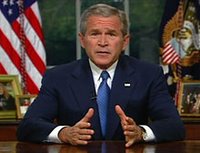 WASHINGTON (CNN) -- Trying to navigate the political minefield of immigration reform in a televised address to the nation Monday night, President Bush called for a "comprehensive" approach to solve "a matter of national importance."
Bush called for the short-term deployment of up to 6,000 National Guard troops in a supporting role along the U.S.-Mexico border.
"The issue of immigration stirs intense emotions -- and in recent weeks, Americans have seen those emotions on display," Bush said in his speech.
"In Washington, the debate over immigration reform has reached a time of decision."
Bush outlined an approach combining tougher border enforcement with a guest-worker program for those "who will do anything to come to America to work and build a better life," according advance excerpts of the speech released by the White House.
"We are a nation of laws, and we must enforce those laws," Bush will say. "We are also a nation of immigrants, and we must hold that tradition, which has strengthened our country in so many ways." (More excerpts)
Bush's Oval Office speech was being carried live at 8 p.m. ET on CNN and Pipeline. (Watch the political implications of the debate -- 1:43)
In a nod to conservatives in his base calling for a crackdown on illegal immigration, the president will concede that "we do not yet have full control of the border" and call on Congress to fund "dramatic improvements" in manpower and technology along the U.S.-Mexico border.
He will also reiterate his opposition to giving illegal immigrants already in the country an "automatic path" to citizenship, according to the excerpts.
But in a nod to America's growing and politically vital Latino population, Bush will also make the argument that a guest-worker program is necessary to gain control of the border and relieve the "enormous pressures on our border that walls and patrols alone will not stop."
He will also outline what his top political adviser, Karl Rove, called a "comprehensive vision" for what to do about more than 11 million illegal immigrants already in the country.
"This is a problem of security. It is a problem of our economy. It is a problem of compassion," Rove said in a speech Monday to the American Enterprise Institute. "It is a problem that we have to attack on several different fronts simultaneously if we hope to resolve it."
Bush has long championed a guest-worker program that would allow people to enter the United States to fill jobs for which employers can't find enough American workers.
Monday night, he is expected to offer his most in-depth comments to date on the politically thorny issue of what to do with illegal immigrants already in the country.
The Senate resumed debate Monday on immigration legislation that would create a mechanism by which illegal immigrants could proceed toward legal status, and eventual citizenship, by working for a number of years, paying fines, undergoing a background check and learning English.
Critics dismiss such a legalization process as "amnesty." Supporters reject that term, insisting the process amounts to "earned citizenship."
In his speech, Bush will come out against "amnesty," which he will define as giving illegal immigrants "an automatic path to citizenship," according to the excerpts.
It remains unclear if under that definition the Senate's approach would be acceptable to the president.
Any form of legalization could be a tough sell to members of Bush's own party, particularly in the House, where lawmakers passed an immigration bill in December that contained neither a worker program nor a legalization process.
Critics of a legalization process say it would only encourage more people to cross the border illegally -- and that not enough has been done to increase security in order to stop them.
Thursday, May 04, 2006
Opinion: Who would you like to have as the next president of the U.S.? Give specific reasons.
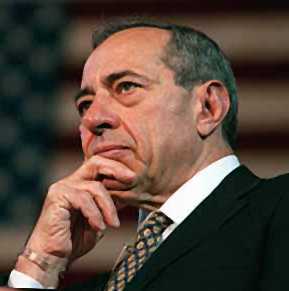
I would like to see Mario Cuomo run for president and win. He is a great speaker, an intellectual, and an intense advocate for all the people. He would restore confidence in the presidency by explaining what he is doing even when he is making tough decisions. He would make an argument for what he believes in instead of attacking people personally who disagree with him. He's someone I would be proud to follow. Unfortunately, I don't think he'll ever consider running again. Am I stuck in the 80's? If you get a chance, take a look at his speeches at the Democratic Conventions. You can see a picture and listen at: http://www.americanrhetoric.com/speeches/cuomo1984dnc.htm
Analysis: Who do you think will be the presidential nominee for each major poltical party? Who do you think will win in 2008?
I'm going to take an inverse look at that question and say that I don't think it's going to be Sen. Kerry for the Democrats. Although he has raised something like $10 million, I don't think that the Democrats will take the chance with him again. Who was the last multi-campaign candidate? Teddy Roosevelt, William Jennings Bryan?
Subscribe to:
Posts (Atom)