Would you agree to be on the ticket as the vice-presidential nominee? Answer wisely:
http://abcnews.go.com/blogs/politics/2012/04/when-no-means-yes-a-guide-to-veepstakes-denials/
Sunday, April 22, 2012

Thursday, April 12, 2012
Vetting Veeps (NOT Petting Peeps) - What is your analysis of who Governor Romney's choice will be?
http://www.centerforpolitics.org/crystalball/articles/veepwatch-part-2-first-do-no-harm-our-vp-contenders/
(Figured out what 'vetting' means? How about SOTU?)
BONUS:
http://www.centerforpolitics.org/crystalball/articles/are-independent-leaners-closet-partisans-or-true-independents/
(Uses the term 'think tanks' and discusses if there really are 'independent' voters.)
"VOCABULARY, VOCABULARY, VOCABULARY." ~ Julius Caesar
(Figured out what 'vetting' means? How about SOTU?)
BONUS:
http://www.centerforpolitics.org/crystalball/articles/are-independent-leaners-closet-partisans-or-true-independents/
(Uses the term 'think tanks' and discusses if there really are 'independent' voters.)
"VOCABULARY, VOCABULARY, VOCABULARY." ~ Julius Caesar
Monday, April 02, 2012
Analysis: Who do you think will win in Wisconsin and what will the impact be on the rest of the race?
http://www.realclearpolitics.com/epolls/latest_polls/
Monday, April 02
Wisconsin Republican Presidential Primary
PPP (D)
Romney 43, Santorum 36, Paul 11, Gingrich 8
Romney +7
General Election: Romney vs. Obama
USA Today/Gallup
Obama 49, Romney 45
Obama +4
General Election: Santorum vs. Obama
USA Today/Gallup
Obama 51, Santorum 43
Obama +8
Maryland Republican Presidential Primary
PPP (D)
Romney 52, Santorum 27, Gingrich 10, Paul 9
Romney +25
Monday, April 02
Wisconsin Republican Presidential Primary
PPP (D)
Romney 43, Santorum 36, Paul 11, Gingrich 8
Romney +7
General Election: Romney vs. Obama
USA Today/Gallup
Obama 49, Romney 45
Obama +4
General Election: Santorum vs. Obama
USA Today/Gallup
Obama 51, Santorum 43
Obama +8
Maryland Republican Presidential Primary
PPP (D)
Romney 52, Santorum 27, Gingrich 10, Paul 9
Romney +25
Sunday, April 01, 2012
ATTENTION! ATTENTION! UPDATE! UPDATE!
So it turns out I found a missing section of our vocabulary list which means we are WAY behind on our vocabulary quizzes. We will need to take one in the coming week. Since they are scheduled to be taken on Thursdays, you will have to make arrangements to come into school on Thursday. Make sure you click here to find out more information on Thursday's quiz: http://www.allgraphics123.com/ag/01/6488/6488.gif
Thursday, March 29, 2012
FYI: Predictions on Congressional election outcomes in November (with a little inside baseball).

http://www.centerforpolitics.org/crystalball/articles/category/2012-house/

Larry Sabato is a well-respected political scientist and a co-author on the new textbook we'll be using in the fall of 2012.
Sunday, March 25, 2012
Analysis: What will you be looking for as you listen to the oral arguments this week?

What a great week coming up: Judicial Branch check on the Congress and president, judicial review, commerce clause, solicitor general, mandate, litigation, adversarial process, standing, precedents... all because the Court used the "Rule of Four" to grant a writ of certiori!
Sunday, March 18, 2012
Sunday, March 11, 2012
Sunday, March 04, 2012
With Super Tuesday coming up, give your analysis and opinion of the current nominating PROCESS to be the party's nominee.
 Discuss any or all of the following: front loading, winner take all vs. proportional distribution of delegates, primaries, caucuses, the length of the process, the money that is raised and spent, stump speeches, running to the right (for the GOP) and to the left (for the Dems.) in the primary process and back to the middle for the general, placing Iowa and New Hampshire first.
Sunday, February 26, 2012
Which of the 9 political funding options do you find the most interesting, surprising, or new to you?
From $25 to $10,000,000: A Guide to Political Donations
http://www.nytimes.com/interactive/2011/10/17/us/politics/a-guide-to-political-donations.html
http://www.nytimes.com/interactive/2011/10/17/us/politics/a-guide-to-political-donations.html
Sunday, February 19, 2012


Saturday, February 18, 2012
Opinion: Should same-gender marriage be decided by referendum, legislative action, or the courts?
By Ricardo Lopez
February 17, 2012, 4:21 p.m.
New Jersey Gov. Chris Christie followed through on his word Friday, vetoing a gay marriage bill passed by the state’s legislature a day earlier.
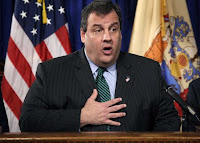
Democrats were not surprised by the veto. Christie, a Republican, announced his intentions last month at a town hall meeting.
Yet Senate President Stephen Sweeney, a Democrat, denounced the governor's action and vowed to work to override it.“Governor Christie's veto is a shameful act hidden behind the guise of a public referendum. Today, he firmly planted his feet on the wrong side of history,” he said in a statement.
“He had a chance to do the right thing, and failed miserably.”
New Jersey lawmakers now have until Jan. 2014 to muster a two-thirds majority vote in each chamber to override the governor’s veto.Gay marriage supporters need three more votes in the Senate to override the veto. Senate Democrats passed the bill 24-16. The Assembly, which passed the bill 42-33, needs needs 14 more votes for a veto override.
On Thursday, the Democratic-controlled Assembly voted 42-33 in favor of gay marriage.
That vote came after emotional speeches from both sides on Thursday. Seven states and the District of Columbia recognize same-sex marriage.
http://www.latimes.com/news/nation/nationnow/la-na-nn-christie-veto-20120217,0,1375226.story
February 17, 2012, 4:21 p.m.
New Jersey Gov. Chris Christie followed through on his word Friday, vetoing a gay marriage bill passed by the state’s legislature a day earlier.
“I am adhering to what I've said since this bill was first introduced - an issue of this magnitude and importance, which requires a constitutional amendment, should be left to the people of New Jersey to decide," Christie said in a statement.
Christie is urging the legislature to put the measure on the ballot in the form of a referendum.
“This is the only path to amend our state Constitution and the best way to resolve the issue of same-sex marriage in our state,” he said.
Democrats were not surprised by the veto. Christie, a Republican, announced his intentions last month at a town hall meeting.
Yet Senate President Stephen Sweeney, a Democrat, denounced the governor's action and vowed to work to override it.“Governor Christie's veto is a shameful act hidden behind the guise of a public referendum. Today, he firmly planted his feet on the wrong side of history,” he said in a statement.
“He had a chance to do the right thing, and failed miserably.”
New Jersey lawmakers now have until Jan. 2014 to muster a two-thirds majority vote in each chamber to override the governor’s veto.Gay marriage supporters need three more votes in the Senate to override the veto. Senate Democrats passed the bill 24-16. The Assembly, which passed the bill 42-33, needs needs 14 more votes for a veto override.
On Thursday, the Democratic-controlled Assembly voted 42-33 in favor of gay marriage.
That vote came after emotional speeches from both sides on Thursday. Seven states and the District of Columbia recognize same-sex marriage.
http://www.latimes.com/news/nation/nationnow/la-na-nn-christie-veto-20120217,0,1375226.story
Sunday, February 12, 2012
Opinion: What should the Administration be doing right now with regard to the environment (if anything)?
http://www.washingtonpost.com/national/health-science/obama-administration-weighs-political-cost-of-environmental-rules/2012/02/07/gIQAvJzx8Q_story.html?hpid=z1
By the way, our Wednesday after-school practice session has to be moved to Thursday this week because my Uncle Roy Pirrung will be speaking to the track team Wednesday. If you want to hear him speak too, feel free to show up. It's interesting and inspiring. His bio. is below:
http://www.usatf.org/athletes/bios/MountainUltraTrail/Pirrung_Roy.asp
By the way, our Wednesday after-school practice session has to be moved to Thursday this week because my Uncle Roy Pirrung will be speaking to the track team Wednesday. If you want to hear him speak too, feel free to show up. It's interesting and inspiring. His bio. is below:
http://www.usatf.org/athletes/bios/MountainUltraTrail/Pirrung_Roy.asp
Sunday, February 05, 2012
Less than 100 days. How long will you be able to stay for Wednesday's Exam Practice Session?
What else are you doing to get ready for the APGOPO Exam?
(oh, and Romney won Nevada).
(oh, and Romney won Nevada).
Thursday, January 26, 2012
Do you want to see Mr. Romney or Mr. Gingrich win by a lot in Florida? Do you want the contest to go on a lot longer?
Where will a lot of Latino voters go? Will a lot of votes go to the candidate who FL thinks will win in the general election. As the late Tim Russert said a lot of years ago (2000): Florida, Florida, Florida.
Sunday, January 22, 2012
What do you want to hear the president talk about in the State of the Union Address Tuesday?
Article II, Section 3 - State of the Union, Convening Congress
He shall from time to time give to the Congress Information of the State of the Union, and recommend to their Consideration such Measures as he shall judge necessary and expedient; he may, on extraordinary Occasions, convene both Houses, or either of them, and in Case of Disagreement between them, with Respect to the Time of Adjournment, he may adjourn them to such Time as he shall think proper; he shall receive Ambassadors and other public Ministers; he shall take Care that the Laws be faithfully executed, and shall Commission all the Officers of the United States.
http://www.time.com/time/specials/packages/completelist/0,29569,2044176,00.html
He shall from time to time give to the Congress Information of the State of the Union, and recommend to their Consideration such Measures as he shall judge necessary and expedient; he may, on extraordinary Occasions, convene both Houses, or either of them, and in Case of Disagreement between them, with Respect to the Time of Adjournment, he may adjourn them to such Time as he shall think proper; he shall receive Ambassadors and other public Ministers; he shall take Care that the Laws be faithfully executed, and shall Commission all the Officers of the United States.
http://www.time.com/time/specials/packages/completelist/0,29569,2044176,00.html
Sunday, January 15, 2012
Tuesday, January 03, 2012
Sunday, December 18, 2011
Is the Senate-passed plan a good plan that should be passed or a bad plan that should be voted down?
Boehner: House Republicans oppose Senate payroll tax deal
http://www.washingtonpost.com/politics/senate-votes-to-extend-payroll-tax-cut/2011/12/17/gIQAJ6tR0O_story.html
http://www.washingtonpost.com/politics/senate-votes-to-extend-payroll-tax-cut/2011/12/17/gIQAJ6tR0O_story.html
Sunday, December 11, 2011
Sunday, December 04, 2011
Sunday, November 20, 2011
Supercommittee 2.0: What would you do to meet the goals of the Supercommittee by Wednesday?
Click "Next" at the top of the following page, and make the hard PUBLIC POLICY choices:
http://crfb.org/stabilizethedebt/
http://abcnews.go.com/blogs/politics/2011/11/supercommittee-republicans-offer-backup-plan-democrats-reject-the-offer/
http://crfb.org/stabilizethedebt/
http://abcnews.go.com/blogs/politics/2011/11/supercommittee-republicans-offer-backup-plan-democrats-reject-the-offer/
Sunday, November 13, 2011
Are you hopeful that the supercommittee can complete its task before the deadline? Why or why not?
Sunday, November 06, 2011
Analysis: Objectively assess the presidential campaign as it is right now and make a prediction for what the outcome will be in one year.
Reading the information below may help with your analysis:
http://www.washingtonpost.com/politics/a-year-from-election-day-2012-a-dark-mood-awaits-obama-and-his-gop-rival/2011/11/04/gIQAaPa0qM_story.html
http://www.washingtonpost.com/politics/a-year-from-election-day-2012-a-dark-mood-awaits-obama-and-his-gop-rival/2011/11/04/gIQAaPa0qM_story.html
Sunday, October 30, 2011
Analysis:If everyone changes their mind, especially political candidates, why do we spend so much time debating who is a "flip flopper" and who isn't?
Click on the link below to take you to a recent story about the 2012 campaign and flip flopping:
http://politicalticker.blogs.cnn.com/2011/10/28/huntsman-romneys-a-perfectly-lubricated-weathervane/
http://politicalticker.blogs.cnn.com/2011/10/28/huntsman-romneys-a-perfectly-lubricated-weathervane/
Sunday, October 23, 2011
Opinion: Should private investment replace block grants and categorical grants in order to maintain/improve important infrastructure?
With U.S. infrastructure aging, public funds scant, more projects going private
http://www.washingtonpost.com/business/with-us-infrastructure-aging-public-funds-scant-more-projects-going-private/2011/10/17/gIQAGTuv4L_story.html?hpid=z3
http://www.washingtonpost.com/business/with-us-infrastructure-aging-public-funds-scant-more-projects-going-private/2011/10/17/gIQAGTuv4L_story.html?hpid=z3
Sunday, October 09, 2011
Opinion: Are you concerned about voter fraud? Are you concerned that new laws will hinder people from voting?
Sunday, October 02, 2011
Sunday, September 25, 2011
Friday, September 09, 2011
Sunday, May 01, 2011
Great Last Minute Video Reviews, Explanations and Discussions of Terms (and look closely for the Romney signs!)
NEW ADVICE: DON'T (DON'T) LABEL INDIVIDUAL SECTIONS (e.g. "A" "B" etc.) Skip a line and write a new paragraph for B, but don't label it. Reason? You can't get A points in a section labeled B! Pass it on!
COMMERCE CLAUSE SUMMARY:
http://www.policyarchive.org/handle/10207/2106
In no particular order. See my notes if you can only watch or listen to a few. Bring several number 2 pencils and a watch to keep track of time.
Federalism Video:
http://www.youtube.com/watch?v=p-WrRTdsxzc&feature=related
Interest Groups:
http://www.youtube.com/watch?v=oDeBuhIQdYk&feature=related
Lobbying:
http://www.youtube.com/watch?v=M8jbybetAgM&feature=related
Government and Media: A MUST SEE!
http://www.youtube.com/watch?v=9m3dnWxDW04&feature=related
Campaigns and Elections:
http://www.youtube.com/watch?v=bcd67HgIYzU&feature=related
Red States vs. Blue States
http://www.youtube.com/watch?v=sANGxV0jhe8&feature=related
The Concept of Suffrage:
http://www.youtube.com/watch?v=0RJmUYurekI&feature=related
The Big Tent Concept (Political Parties in the U.S.) A MUST SEE!http://www.youtube.com/watch?v=GFUeF75rork&feature=related
http://www.youtube.com/watch?v=FXJcmFeIZBY&feature=related
The Power of the Presidency IMPORTANT!!
http://www.youtube.com/watch?v=fPBi_rNhh30&feature=related
Selective Incorporation:
http://www.youtube.com/watch?v=B7gkpyYI-sw&feature=related
A Breakdown of Congress:
http://www.youtube.com/watch?v=gg7BuSi1RA0&NR=1
http://www.youtube.com/watch?v=R-YKvx3vH7c&feature=related
The Courts (another must see):
http://www.youtube.com/watch?v=yVLd4vssv70&feature=related
Foundations:
http://www.youtube.com/watch?v=PD3wPsvi1wA&feature=related
Taking the test (MUST. MUST. SEE. SEE):
http://www.youtube.com/watch?v=La1sRu9KVqI&feature=related
COMMERCE CLAUSE SUMMARY:
http://www.policyarchive.org/handle/10207/2106
In no particular order. See my notes if you can only watch or listen to a few. Bring several number 2 pencils and a watch to keep track of time.
Federalism Video:
http://www.youtube.com/watch?v=p-WrRTdsxzc&feature=related
Interest Groups:
http://www.youtube.com/watch?v=oDeBuhIQdYk&feature=related
Lobbying:
http://www.youtube.com/watch?v=M8jbybetAgM&feature=related
Government and Media: A MUST SEE!
http://www.youtube.com/watch?v=9m3dnWxDW04&feature=related
Campaigns and Elections:
http://www.youtube.com/watch?v=bcd67HgIYzU&feature=related
Red States vs. Blue States
http://www.youtube.com/watch?v=sANGxV0jhe8&feature=related
The Concept of Suffrage:
http://www.youtube.com/watch?v=0RJmUYurekI&feature=related
The Big Tent Concept (Political Parties in the U.S.) A MUST SEE!http://www.youtube.com/watch?v=GFUeF75rork&feature=related
http://www.youtube.com/watch?v=FXJcmFeIZBY&feature=related
The Power of the Presidency IMPORTANT!!
http://www.youtube.com/watch?v=fPBi_rNhh30&feature=related
Selective Incorporation:
http://www.youtube.com/watch?v=B7gkpyYI-sw&feature=related
A Breakdown of Congress:
http://www.youtube.com/watch?v=gg7BuSi1RA0&NR=1
http://www.youtube.com/watch?v=R-YKvx3vH7c&feature=related
The Courts (another must see):
http://www.youtube.com/watch?v=yVLd4vssv70&feature=related
Foundations:
http://www.youtube.com/watch?v=PD3wPsvi1wA&feature=related
Taking the test (MUST. MUST. SEE. SEE):
http://www.youtube.com/watch?v=La1sRu9KVqI&feature=related
Sunday, April 17, 2011
Sunday, March 20, 2011
Sunday, March 06, 2011
Opinion: Are you ready for the 2012 campaign? Who will the nominees be?
http://www.washingtonpost.com/wp-dyn/content/article/2011/03/05/AR2011030502069.html
By Dan Balz
Washington Post Staff Writer
Saturday, March 5, 2011; 5:10 PM
As Republicans dither, debating who is and who isn't in the 2012 race for the White House, President Obama and his team are moving swiftly to dive into the business of winning reelection.
No office space has yet been rented. No committee has been formed. No official announcement date has been locked down. But by sometime next month, the president's team is likely to be a functioning, legal entity with a plan.
That should send a message to potential Republican candidates, who have spent the winter trying to convince themselves that they can wait and wait and perhaps wait some more before they get moving. Obama's team believes otherwise. They know what time and effort are required to build a robust organization capable of winning a general election - and how important the work done this year will be.
By Dan Balz
Washington Post Staff Writer
Saturday, March 5, 2011; 5:10 PM
As Republicans dither, debating who is and who isn't in the 2012 race for the White House, President Obama and his team are moving swiftly to dive into the business of winning reelection.
No office space has yet been rented. No committee has been formed. No official announcement date has been locked down. But by sometime next month, the president's team is likely to be a functioning, legal entity with a plan.
That should send a message to potential Republican candidates, who have spent the winter trying to convince themselves that they can wait and wait and perhaps wait some more before they get moving. Obama's team believes otherwise. They know what time and effort are required to build a robust organization capable of winning a general election - and how important the work done this year will be.
Sunday, February 27, 2011
Analysis: Do you think the federal government will be shut down (similar to 1995), or will a deal be reached?
http://voices.washingtonpost.com/2chambers/2011/02/in_latest_sign_shutdown_may_be.html
(And by the way, will you be there after school Tuesday to practice answering APGOPO questions?)
(And by the way, will you be there after school Tuesday to practice answering APGOPO questions?)
Sunday, February 20, 2011
Opinion: What is your view of the protests, counter-protests, and non-traditional political participation going on in Wisconsin?

It's been said that state Democrats and labor unions are trying to reverse the results of the November 2010 elections.
Actually, it's the outcome of a handful of 2008 races that political liberals and conservatives are now working to undo.
Several sources confirmed that Wisconsin Democrats and labor leaders are plotting recall elections for several Republican senators as soon as lawmakers push through Gov. Scott Walker's budget plan to curb collective bargaining rights and require public employees to chip in part of their salary toward their health care and pension costs.
"Those are options people are looking at," said Marty Beil, director of the largest state employees union.
Even more emphatic was Rich Abelson, executive director of AFSCME Council 48, which represents county and city employees in the Milwaukee area.
"This is not a Plan B," Abelson said Friday night. "This is going forward irrespective of how the vote turns out. Oh, yeah, we are going to make a full-court press."
On the other hand, the Citizens for Responsible Government Network has announced that it is advising groups interested in ousting two Senate Democrats who joined their colleagues in fleeing Wisconsin to prevent a vote on Walker's proposed budget repair plan.
"There's a good deal of will to replace these guys," said Chris Kliesmet, head of the conservative political group. "These guys are on the lam."
The wheels already appear to be set in motion for a recall vote in one Milwaukee-area district.
Last week, Sen. Alberta Darling, a River Hills Republican, helped shepherd Walker's budget repair bill through the Joint Finance Committee, of which she is a co-chairman. The vote stalled in the state Senate when the 14 Democrats fled the state, preventing the upper house from being able to get a quorum to meet and vote on the bill that set off massive protests at the Capitol.
Darling defeated then-Rep. Sheldon Wasserman, a Milwaukee Democrat, by a narrow margin in 2008.
Wasserman said Friday that he has been contacted by a handful of Democrats and union officials asking if he would run against Darling if she faces a recall election.
Wasserman, an OB/GYN, made it clear that he is itching to take on the veteran lawmaker. He said Darling, who has run as a moderate Republican, is already toeing Walker's "hard-core conservative" party line.
"I am interested," said Wasserman, who seriously considered running for Milwaukee County executive after Walker was elected governor in November. "She'll have a fight on her hands."
Darling said last week in an interview that she is well aware of the recall talk.
But given the state's looming $3.6 billion budget deficit, she said she is committed to supporting the first-term Republican governor's austerity measures. One of the wealthier members of the Legislature, she said she has no plans to step up her fundraising activity.
Still, Darling did acknowledge that everyone has been caught by surprise by the protests.
"This has much more intensity" than previous ones, said Darling, who has served as a lawmaker for more than 20 years. "Clearly, in terms of numbers, this is the biggest demonstration against a piece of legislation in the Capitol that I have ever seen."
In all, Democratic insiders and labor leaders have identified six Senate Republicans who may be the subject of recall elections. But the focus, so far, seems to be on Darling and Sens. Dan Kapanke of La Crosse and Randy Hopper of Fond du Lac, both of whom are from districts that are fairly evenly divided between Republicans and Democrats.
Kapanke and Hopper left the Capitol early Friday afternoon and could not be reached for comment
Kliesmet, the CRG leader, said his group would be willing to help any lawmakers targeted for recalls because they support Walker's proposal. But the group has not yet been asked.
His group is focusing its efforts on recalling two Democrats - Sen. Jim Holperin of Eagle River and Bob Wirch of Kenosha. Holperin survived a recall effort in 1990.
For Democrats and labor officials, the clock is ticking.
Insiders say they want to make sure the recall elections are held before Republicans, who control the Assembly and Senate, redraw the boundaries for legislative districts in light of the 2010 census numbers, which are being released this month. In addition, Democrats are desperate to stop Walker from pushing through his agenda, something they could do only if they flip three Senate districts currently held by Republicans.
Walker told the Journal Sentinel he is not concerned about his proposals possibly leading to the ouster of some Republicans.
"In the end, doing the right thing is not only the right thing to do," the governor said in a Friday interview. "I think people respect doing the right thing."
State law prohibits anyone from recalling elected officials until they have held office for at least a year. That means, despite all the talk among Madison protesters, Walker cannot be the subject of a recall election for nearly another year. The same holds true for all the members of the state Assembly and half of the state senators.
One prominent Democrat told No Quarter that national labor leaders are deeply involved in planning the recall elections against Senate Republicans - even though national and local labor officials disputed this.
The Wall Street Journal reported last week that the presidents of dozens of national unions had pledged more than $25 million to counter efforts to scale back bargaining rights in Wisconsin and other states. In addition, Politicosaid last week that the Democratic National Committee's Organizing for America arm - the part of President Barack Obama's presidential campaign - is helping out with the Wisconsin protests.
That has Walker supporters suggesting that the rallies and recall efforts are actually intended to serve as early organizational efforts for Obama's re-election bid next year in a crucial swing state.
"I wish I was that smart," said state AFL-CIO President Phil Neuenfeldt.
Recall elections are never gimmes, despite how upset voters may be about an issue.
The last Wisconsin lawmaker to be recalled from office was then-Sen. Gary George, who was ousted in 2003 just days before he was hit with federal corruption charges. He eventually served time behind bars after pleading guilty to one count of conspiracy for accepting about $270,000 in kickbacks of legal fees paid by an inner-city social service agency. Before that, then-Sen. George Petak, a Racine Republican, was bumped from office after switching his vote and supporting a regional tax to pay for the construction of Miller Park.
In a recall election, organizers have 60 days to collect signatures from enough voters to equal at least 25% of the vote cast in the 2010 governor's race in that district. If more than two candidates compete in the recall, a primary election is held about six weeks after the recall petition is certified. The top two contenders face off in a general election a month later if no one gets more than half of the vote.
"The whole process takes about 4½ months from beginning to end," said Kliesmet, whose group has assisted several communities in recall votes since 2002. "Getting signatures is easy. Winning elections is difficult."
Not surprisingly, leaders on both sides of the recall talk have begun disparaging each other's efforts.
Abelson, the Milwaukee labor leader, said CRG is made up of little more than Kliesmet and two of his friends. The group assisted voters who tried unsuccessfully to recall former Gov.Jim Doyle and ex-Sen. Jim Sullivan of Wauwatosa.
"I know they've got stationery, and they like to send things out," Abelson said. "But that rings ridiculous in the most absurd way."
But the leaders of the citizens group said voters assisted by CRG successfully recalled eight local officials last year, while Dems failed to take down Walker when he was still leading county government.
"I'll put my track record up against his any day," Kliesmet said.
Better still, the two sides will get to go head to head in the coming months if they get what they wish.
Daniel Bice can be contacted by phone at (414) 224-2135 or by e-mail at dbice@journalsentinel.com.
Sunday, February 13, 2011
Sunday, February 06, 2011
Happy Super Birthday Mr. President! What do you think are the three most significant parts of the Reagan Administration (positive, negative, or both)
The Super Bowl and Politics: According to Chris Matthews, this is America's Super Bowl because it's two teams named after the real working men and women of America: the steelworkers of Pittsburgh and the meat Packers of Green Bay. Politics is everywhere...AND did you know that Packer Charlie "Peprah is the grandson of the former military president of Ghana, general Ignatius Kutu Acheampong. Ruling in a coup d’etat in 1972, Acheampong remained in power until 1977 and was executed in 1979 after a revolution..."
Ronald Reagan in perspective:
http://www.washingtonpost.com/wp-dyn/content/article/2011/02/03/AR2011020303647.html?hpid=artslot
Ronald Reagan in perspective:
http://www.washingtonpost.com/wp-dyn/content/article/2011/02/03/AR2011020303647.html?hpid=artslot
Tuesday, January 25, 2011
What are you looking for in the State of the Union?
What to Look for Tonight
First Read: "Many of the themes that President Obama is expected to discuss tonight in his State of the Union address -- the future and competitiveness, job creation, deficit reduction, investments in infrastructure, civility in politics -- aren't new. In fact, they were parts of the State of the Union speech he delivered a year ago. (One example: 'What the American people hope -- what they deserve -- is for all of us, Democrats and Republicans, to work through our differences...') But while tonight's words might not change much, the political environment certainly has. For starters, Republicans now control the House (so it will be John Boehner, not Nancy Pelosi, standing behind Obama tonight), and they've gained additional seats in the Senate, which makes it all but impossible for Democrats to enjoy the same legislative successes they had in '09 and '10.
"The Note: "The White House has also indicated that the president will continue to defend the health care reform law, which Republicans have been seeking to dismantle. The speech will clearly focus on domestic policy, but expect a mention of the ongoing conflict in Afghanistan as well as other looming international and national security issues."See more...
First Read: "Many of the themes that President Obama is expected to discuss tonight in his State of the Union address -- the future and competitiveness, job creation, deficit reduction, investments in infrastructure, civility in politics -- aren't new. In fact, they were parts of the State of the Union speech he delivered a year ago. (One example: 'What the American people hope -- what they deserve -- is for all of us, Democrats and Republicans, to work through our differences...') But while tonight's words might not change much, the political environment certainly has. For starters, Republicans now control the House (so it will be John Boehner, not Nancy Pelosi, standing behind Obama tonight), and they've gained additional seats in the Senate, which makes it all but impossible for Democrats to enjoy the same legislative successes they had in '09 and '10.
"The Note: "The White House has also indicated that the president will continue to defend the health care reform law, which Republicans have been seeking to dismantle. The speech will clearly focus on domestic policy, but expect a mention of the ongoing conflict in Afghanistan as well as other looming international and national security issues."See more...
Sunday, January 16, 2011
Monday is MLK Day. How will you celebrate the impressive political life of this American who helped pass the Civil Rights Act of 1964?
On Martin Luther King Day, remembering the first draft of 'I Have a Dream'
By Clarence B. Jones
Sunday, January 16, 2011;
It was the late spring of 1963, and my friend Martin was exhausted. The campaign to integrate the public facilities in Birmingham had been successful but also tremendously taxing. In its aftermath, he wanted nothing more than to take Coretta and the children away for a vacation and forget - forget the looming book deadline, the office politics of his ever-growing Southern Christian Leadership Conference, the constant need to raise funds.
But a date for the March on Washington for Jobs and Freedom had been nailed down - Aug. 28 - and Martin realized he couldn't plan such a massive undertaking with the usual endless interruptions. No, if this march were going to come together in time, he would have to escape all the distractions. (This was a man, after all, whose best writing was done inside a jail cell.) He needed to get away to a place where very few people could reach him.
That would be my house in Riverdale, N.Y.
For the previous three years, I had been an adviser to Martin Luther King Jr., his personal lawyer and one of his speechwriters. Stanley Levison, another adviser who had done even more work with Martin on his speeches than I had, was also a New Yorker. Because of some dark ops on the part of the FBI, Martin could not deal directly with Stanley, yet he very much valued his advice, so it made sense for Martin to stay at my home and have me act as a go-between as we planned the March on Washington - and the speech Martin would deliver.
The logistical preparations for the march were so burdensome that the speech was not a priority for us. Early in the summer, Martin asked some trusted colleagues at the SCLC for their thoughts on his address, and during his weeks in New York, we had discussions about it. But it wasn't until mid-August that Martin had Stanley and I work up a draft. And though I had that material with me when I arrived at the Willard Hotel in Washington for a meeting on the evening of Tuesday, Aug. 27, Martin still didn't know what he was going to say.
We met in the lobby rather than in a suite, under the assumption that the lobby would be harder to wiretap. Tables, chairs and plants acted as a cordon of privacy. It was with this odd start, hiding in plain sight, that 12 hours before the March on Washington began, Martin gathered with a small group of advisers to hammer out the themes of his speech.
He had reacted well to the material Stanley and I had prepared, but he also knew that many of the march's supporters and organizers - labor unions, religious groups, community organizations and academic leaders - needed to be heard as well. So that evening he had a cross-section of advisers present to fill any blind spots. Cleveland Robinson, Walter Fauntroy, Bernard Lee, Ralph Abernathy, Lawrence Reddick and I joined him, along with Wyatt Walker and Bayard Rustin, who were in and out of our deliberations.
As we ate sandwiches, our suggestions tumbled out. Everyone, it seemed, had a different take. Cleve, Lawrence and I saw the speech as an opportunity to stake an ideological and political marker in the debate over civil rights and segregation. Others were more inclined for Martin to deliver a sort of church sermon, steeped in parables and Bible quotes. Some, however, worried that biblical language would obfuscate the real message - reform of the legal system. And still others wanted Martin to direct his remarks to the students, black and white, who would be marching that day.
Martin got frustrated trying to keep everything straight, so he asked me to take notes. I quickly realized that putting together these various concepts into a single address would be difficult. Martin would have to take one approach - his own - with the other ideas somehow supporting his larger vision. I kept on taking notes, wondering how someone would turn all this into a cohesive speech. As it turned out, that would be my task.
Eventually, Martin looked to me and said, "Clarence, why don't you excuse yourself and go upstairs. You can summarize the points made here and return with an outline."
I sat in my room, flipping through the scrawled pages of the yellow legal pad, struggling to boil down everyone's perspectives. The idea of urging the crowd to take specific actions, as opposed to a general kind of complaining, seemed one area of agreement. (The march's organizing manual even had a headline that spelled it out: "What We Demand.")
A conversation that I'd had during the Birmingham campaign with then-New York Gov. Nelson Rockefeller inspired an opening analogy: African Americans marching to Washington to redeem a promissory note or a check for justice. From there, a proposed draft took shape.
And the words "I have a dream" were nowhere in it.
About an hour later, I took my writing back to the lobby and began presenting it to the group. Immediately the others interrupted:
"What about - "
"Why didn't you - "
"I thought we agreed - "
They were all over me. And given the fact that several were Baptist preachers, there was no small amount of grandstanding. I began defending myself, but Martin intervened. "Okay, brothers," he said, "thank you so much everybody for your suggestions and input. . . . I am now going upstairs to my room to counsel with my Lord."
He walked quietly toward the elevators, leaving the rest of us to look at each other. "Tomorrow, then," someone said, and we dispersed.
***
Tomorrow, as history would record, turned out to be an enormous success. The weather and the massive crowd were in sync - both calm and warm for the March on Washington. Even the D.C. Metropolitan Police, which had been bracing for a race riot, had nothing to complain about.
I remember when it was all over but the final act. As I stood some 50 feet behind the lectern, march Chairman A. Philip Randolph introduced Martin, to wild applause, as "the moral leader of our nation." And I still didn't know how Martin had pulled the speech together after our meeting.
After Martin greeted the people assembled, he began his speech, and I was shocked when these words quickly rolled out:
It is obvious today that America has defaulted on this promissory note, insofar as her citizens of color are concerned. Instead of honoring this sacred obligation, America has given the Negro people a bad check.
Martin was essentially reciting the opening suggestions I'd handed in the night before. This was strange, given the way he usually worked over the material Stanley and I provided. When he finished the promissory note analogy, he paused. And in that breach, something unexpected, historic and largely unheralded happened. Martin's favorite gospel singer, Mahalia Jackson, who had performed earlier in the day, called to him from nearby: "Tell 'em about the dream, Martin, tell 'em about the dream!"
Martin clutched the speaker's lectern and seemed to reset. I watched him push the text of his prepared remarks to one side. I knew this performance had just been given over to the spirit of the moment. I leaned over and said to the person next to me, "These people out there today don't know it yet, but they're about ready to go to church."
What could possibly motivate a man standing before a crowd of hundreds of thousands, with television cameras beaming his every move and a cluster of microphones tracing his every word, to abandon the prepared text of his speech and begin riffing on a theme that he had used previously without generating much enthusiasm from listeners?
Before our eyes, he transformed himself into the superb, third-generation Baptist preacher that he was, and he spoke those words that in retrospect feel destined to ring out that day:
I have a dream . . .
In front of all those people, cameras, and microphones, Martin winged it. But then, no one I've ever met could improvise better.
The speech went on to depart drastically from the draft I'd delivered, and I'll be the first to tell you that America is the better for it. As I look back on my version, I realize that nearly any confident public speaker could have held the crowd's attention with it. But a different man could not have delivered "I Have a Dream."
Some believe, though the facts are otherwise, that Martin was such a superlative writer that he never needed others to draft material for him. I understand that belief; fate made Martin a martyr and a unique American myth - and myths stand alone. But admitting that even this unequaled writer had people helping him hardly takes anything away. People like Stanley, Mahalia and I helped him maximize his brilliance. If not, why would Mahalia interrupt a planned address? She wasn't unhappy with the material he was reading - she just wanted him to preach.
That he did. You only have to hear the recording of even a handful of the words from his speech and, for the rest of your life, when you read it you will hear his signature cadence. Can you hear it now?
I have a dream that my four little children will one day live in a nation where they will not be judged by the color of their skin but by the content of their character. I have a dream today!
The crowd was rapt. Tears of joy fell everywhere. And when Martin ended with a cried refrain from a spiritual that predated the Emancipation Proclamation, the sense of history - past and future - struck me full force:
Free at last! Free at last! Thank God Almighty, we are free at last!
***
More than 40 years later, I was invited to visit Stanford University's Martin Luther King, Jr. Research and Education Institute as a candidate for an academic post. I met with the director, who knew I had just started work on a book about Martin and wanted to convince me that I should write it there. To demonstrate the wealth of the institute's research materials, he had me choose a date from the years I had worked with Martin.
I offered Aug. 28, 1963.
One of the staffers soon brought in a cardboard box with papers related to that day. Among them was a copy of the program that had been handed out at the march. At the time, no one could possibly understand the emotional impact this had on me. It was the standard program except for one corner, where it bore a handwritten note to Martin - from me.
"Dear Martin - just learned that Dr. W.E.B. Dubois died last night in Ghana. Someone should make note of this fact."
I was looking at a copy of my own program, something I'd urgently written on and passed through the crowd to Martin up on the dais. Tears welled in my eyes as I imagined its long journey from my hand to the institute's files. I felt Martin, my friend, reaching out and saying to me, "Keep our dream alive."
That is what this country does every January on Martin Luther King Day. I am hopeful that sometime soon, it will be what we do every day of the year.
Adapted from "Behind the Dream" by Clarence B. Jones and Stuart Connelly. Copyright 2011 by the authors and reprinted by permission of Palgrave Macmillan, a division of Macmillan Publishers Limited.
Clarence B. Jones, a scholar in residence at the Martin Luther King, Jr. Research and Education Institute at Stanford University, is a co-author, with Stuart Connelly, of the new book "Behind the Dream: The Making of the Speech That Transformed a Nation," from which this essay is adapted.
By Clarence B. Jones
Sunday, January 16, 2011;
It was the late spring of 1963, and my friend Martin was exhausted. The campaign to integrate the public facilities in Birmingham had been successful but also tremendously taxing. In its aftermath, he wanted nothing more than to take Coretta and the children away for a vacation and forget - forget the looming book deadline, the office politics of his ever-growing Southern Christian Leadership Conference, the constant need to raise funds.
But a date for the March on Washington for Jobs and Freedom had been nailed down - Aug. 28 - and Martin realized he couldn't plan such a massive undertaking with the usual endless interruptions. No, if this march were going to come together in time, he would have to escape all the distractions. (This was a man, after all, whose best writing was done inside a jail cell.) He needed to get away to a place where very few people could reach him.
That would be my house in Riverdale, N.Y.
For the previous three years, I had been an adviser to Martin Luther King Jr., his personal lawyer and one of his speechwriters. Stanley Levison, another adviser who had done even more work with Martin on his speeches than I had, was also a New Yorker. Because of some dark ops on the part of the FBI, Martin could not deal directly with Stanley, yet he very much valued his advice, so it made sense for Martin to stay at my home and have me act as a go-between as we planned the March on Washington - and the speech Martin would deliver.
The logistical preparations for the march were so burdensome that the speech was not a priority for us. Early in the summer, Martin asked some trusted colleagues at the SCLC for their thoughts on his address, and during his weeks in New York, we had discussions about it. But it wasn't until mid-August that Martin had Stanley and I work up a draft. And though I had that material with me when I arrived at the Willard Hotel in Washington for a meeting on the evening of Tuesday, Aug. 27, Martin still didn't know what he was going to say.
We met in the lobby rather than in a suite, under the assumption that the lobby would be harder to wiretap. Tables, chairs and plants acted as a cordon of privacy. It was with this odd start, hiding in plain sight, that 12 hours before the March on Washington began, Martin gathered with a small group of advisers to hammer out the themes of his speech.
He had reacted well to the material Stanley and I had prepared, but he also knew that many of the march's supporters and organizers - labor unions, religious groups, community organizations and academic leaders - needed to be heard as well. So that evening he had a cross-section of advisers present to fill any blind spots. Cleveland Robinson, Walter Fauntroy, Bernard Lee, Ralph Abernathy, Lawrence Reddick and I joined him, along with Wyatt Walker and Bayard Rustin, who were in and out of our deliberations.
As we ate sandwiches, our suggestions tumbled out. Everyone, it seemed, had a different take. Cleve, Lawrence and I saw the speech as an opportunity to stake an ideological and political marker in the debate over civil rights and segregation. Others were more inclined for Martin to deliver a sort of church sermon, steeped in parables and Bible quotes. Some, however, worried that biblical language would obfuscate the real message - reform of the legal system. And still others wanted Martin to direct his remarks to the students, black and white, who would be marching that day.
Martin got frustrated trying to keep everything straight, so he asked me to take notes. I quickly realized that putting together these various concepts into a single address would be difficult. Martin would have to take one approach - his own - with the other ideas somehow supporting his larger vision. I kept on taking notes, wondering how someone would turn all this into a cohesive speech. As it turned out, that would be my task.
Eventually, Martin looked to me and said, "Clarence, why don't you excuse yourself and go upstairs. You can summarize the points made here and return with an outline."
I sat in my room, flipping through the scrawled pages of the yellow legal pad, struggling to boil down everyone's perspectives. The idea of urging the crowd to take specific actions, as opposed to a general kind of complaining, seemed one area of agreement. (The march's organizing manual even had a headline that spelled it out: "What We Demand.")
A conversation that I'd had during the Birmingham campaign with then-New York Gov. Nelson Rockefeller inspired an opening analogy: African Americans marching to Washington to redeem a promissory note or a check for justice. From there, a proposed draft took shape.
And the words "I have a dream" were nowhere in it.
About an hour later, I took my writing back to the lobby and began presenting it to the group. Immediately the others interrupted:
"What about - "
"Why didn't you - "
"I thought we agreed - "
They were all over me. And given the fact that several were Baptist preachers, there was no small amount of grandstanding. I began defending myself, but Martin intervened. "Okay, brothers," he said, "thank you so much everybody for your suggestions and input. . . . I am now going upstairs to my room to counsel with my Lord."
He walked quietly toward the elevators, leaving the rest of us to look at each other. "Tomorrow, then," someone said, and we dispersed.
***
Tomorrow, as history would record, turned out to be an enormous success. The weather and the massive crowd were in sync - both calm and warm for the March on Washington. Even the D.C. Metropolitan Police, which had been bracing for a race riot, had nothing to complain about.
I remember when it was all over but the final act. As I stood some 50 feet behind the lectern, march Chairman A. Philip Randolph introduced Martin, to wild applause, as "the moral leader of our nation." And I still didn't know how Martin had pulled the speech together after our meeting.
After Martin greeted the people assembled, he began his speech, and I was shocked when these words quickly rolled out:
It is obvious today that America has defaulted on this promissory note, insofar as her citizens of color are concerned. Instead of honoring this sacred obligation, America has given the Negro people a bad check.
Martin was essentially reciting the opening suggestions I'd handed in the night before. This was strange, given the way he usually worked over the material Stanley and I provided. When he finished the promissory note analogy, he paused. And in that breach, something unexpected, historic and largely unheralded happened. Martin's favorite gospel singer, Mahalia Jackson, who had performed earlier in the day, called to him from nearby: "Tell 'em about the dream, Martin, tell 'em about the dream!"
Martin clutched the speaker's lectern and seemed to reset. I watched him push the text of his prepared remarks to one side. I knew this performance had just been given over to the spirit of the moment. I leaned over and said to the person next to me, "These people out there today don't know it yet, but they're about ready to go to church."
What could possibly motivate a man standing before a crowd of hundreds of thousands, with television cameras beaming his every move and a cluster of microphones tracing his every word, to abandon the prepared text of his speech and begin riffing on a theme that he had used previously without generating much enthusiasm from listeners?
Before our eyes, he transformed himself into the superb, third-generation Baptist preacher that he was, and he spoke those words that in retrospect feel destined to ring out that day:
I have a dream . . .
In front of all those people, cameras, and microphones, Martin winged it. But then, no one I've ever met could improvise better.
The speech went on to depart drastically from the draft I'd delivered, and I'll be the first to tell you that America is the better for it. As I look back on my version, I realize that nearly any confident public speaker could have held the crowd's attention with it. But a different man could not have delivered "I Have a Dream."
Some believe, though the facts are otherwise, that Martin was such a superlative writer that he never needed others to draft material for him. I understand that belief; fate made Martin a martyr and a unique American myth - and myths stand alone. But admitting that even this unequaled writer had people helping him hardly takes anything away. People like Stanley, Mahalia and I helped him maximize his brilliance. If not, why would Mahalia interrupt a planned address? She wasn't unhappy with the material he was reading - she just wanted him to preach.
That he did. You only have to hear the recording of even a handful of the words from his speech and, for the rest of your life, when you read it you will hear his signature cadence. Can you hear it now?
I have a dream that my four little children will one day live in a nation where they will not be judged by the color of their skin but by the content of their character. I have a dream today!
The crowd was rapt. Tears of joy fell everywhere. And when Martin ended with a cried refrain from a spiritual that predated the Emancipation Proclamation, the sense of history - past and future - struck me full force:
Free at last! Free at last! Thank God Almighty, we are free at last!
***
More than 40 years later, I was invited to visit Stanford University's Martin Luther King, Jr. Research and Education Institute as a candidate for an academic post. I met with the director, who knew I had just started work on a book about Martin and wanted to convince me that I should write it there. To demonstrate the wealth of the institute's research materials, he had me choose a date from the years I had worked with Martin.
I offered Aug. 28, 1963.
One of the staffers soon brought in a cardboard box with papers related to that day. Among them was a copy of the program that had been handed out at the march. At the time, no one could possibly understand the emotional impact this had on me. It was the standard program except for one corner, where it bore a handwritten note to Martin - from me.
"Dear Martin - just learned that Dr. W.E.B. Dubois died last night in Ghana. Someone should make note of this fact."
I was looking at a copy of my own program, something I'd urgently written on and passed through the crowd to Martin up on the dais. Tears welled in my eyes as I imagined its long journey from my hand to the institute's files. I felt Martin, my friend, reaching out and saying to me, "Keep our dream alive."
That is what this country does every January on Martin Luther King Day. I am hopeful that sometime soon, it will be what we do every day of the year.
Adapted from "Behind the Dream" by Clarence B. Jones and Stuart Connelly. Copyright 2011 by the authors and reprinted by permission of Palgrave Macmillan, a division of Macmillan Publishers Limited.
Clarence B. Jones, a scholar in residence at the Martin Luther King, Jr. Research and Education Institute at Stanford University, is a co-author, with Stuart Connelly, of the new book "Behind the Dream: The Making of the Speech That Transformed a Nation," from which this essay is adapted.
Sunday, January 09, 2011
Which of the following decisions have had the most significant impact in the U.S.? Why? (Can you give your top 3?)
1. Gitlow v. New York
2. Powell v. Alabama
3. Mapp v. Ohio
4. Gideon v. Wainwright
5. Near v. Minnesota
6. Griswold v. Connecticut
7. Roe v. Wade
8. Brandenburg v. Ohio
9. Schenck v. United States
10. Hustler Magazine, Inc. v. Falwell
11. Miller v. California
12. Texas v. Johnson
13. Miranda v. Arizona
14. Tinker v. Des Moines
15. Webster v. Reproductive Health Services
16. Planned Parenthood of Southeastern PN v. Casey
17. Bowers v. Hardwick
18. Lemon v. Kurtzman
19. Weeks v. United States
20. Furman v. Georgia
2. Powell v. Alabama
3. Mapp v. Ohio
4. Gideon v. Wainwright
5. Near v. Minnesota
6. Griswold v. Connecticut
7. Roe v. Wade
8. Brandenburg v. Ohio
9. Schenck v. United States
10. Hustler Magazine, Inc. v. Falwell
11. Miller v. California
12. Texas v. Johnson
13. Miranda v. Arizona
14. Tinker v. Des Moines
15. Webster v. Reproductive Health Services
16. Planned Parenthood of Southeastern PN v. Casey
17. Bowers v. Hardwick
18. Lemon v. Kurtzman
19. Weeks v. United States
20. Furman v. Georgia
This shouldn't happen in our country.
By PAULINE ARRILLAGA, Associated Press Pauline Arrillaga, Associated Press – 11 mins ago
TUCSON, Ariz. – The "shady individual" showed up at a public gathering for Rep. Gabrielle Giffords asking to see the lawmaker, according to event volunteer Alex Villec. Told he would have to wait his turn, the man left but returned minutes later and gunfire erupted.
The man, wearing a black cap and baggy pants and shirt, rushed by a table separating him and Giffords, raised an arm, and then came shots, Villec, 19, told The Associated Press.
Firing a semiautomatic weapon, the gunman targeted Giffords as she met with constituents around 10 a.m. Saturday outside a busy Tucson supermarket. Authorities said Arizona's chief federal judge and five others were killed and 13 people were wounded, including the Democrat lawmaker.
He also fired at her district director and shot indiscriminately at staffers and others standing in line to talk to the congresswoman, said Mark Kimble, a communications staffer for Giffords.
"He was not more than three or four feet from the congresswoman and the district director," Kimble said, describing the scene as "just complete chaos, people screaming, crying."
Click image to see scenes from the shooting in Arizona
AFP/Getty Images/John Moore
Pima County Sheriff Clarence Dupnik said the rampage ended only after two people tackled the gunman.
"He was definitely on a mission," said Villec, a former Giffords intern.
Police say the shooter was in custody, and was identified by people familiar with the investigation as Jared Loughner, 22. U.S. officials who provided his name to the AP spoke on condition of anonymity because they were not authorized to release it publicly.
His motivation was not immediately known, but Dupnik described him as mentally unstable and possibly acting with an accomplice. His office said a man possibly associated with the suspect who was near the scene was being sought. The man, who was photographed by a security camera, was described as white with dark hair and 40-45 years old.
The assassination attempt left the three-term congresswoman in critical condition after a bullet passed through her head.
It also left Americans questioning whether divisive politics had pushed the suspect over the edge.
A shaken President Barack Obama called the attack "a tragedy for our entire country."
Attorney General Eric Holder said in a statement Sunday that FBI Director Robert Mueller was traveling to Arizona to help coordinate the investigation.
Giffords, 40, is a moderate Democrat who narrowly won re-election in November against a tea party candidate who sought to throw her from office over her support of the health care law. Anger over her position became violent at times, with her Tucson office vandalized after the House passed the overhaul last March and someone showing up at a recent gathering with a weapon.
Authorities said the dead included U.S. District Judge John Roll, 63; Christina Greene, 9; Giffords aide Gabe Zimmerman, 30; Dorothy Morris, 76; Dorwin Stoddard, 76; and Phyllis Scheck, 79. Judge Roll had just stopped by to see his friend Giffords after attending Mass.
The sheriff blamed the vitriolic political rhetoric that has consumed the country, much of it occurring in Arizona.
Giffords expressed similar concern, even before the shooting. In an interview after her office was vandalized, she referred to the animosity against her by conservatives, including Sarah Palin's decision to list Giffords' seat as one of the top "targets" in the midterm elections.
"For example, we're on Sarah Palin's targeted list, but the thing is, that the way that she has it depicted has the crosshairs of a gun sight over our district. When people do that, they have to realize that there are consequences to that action," Giffords said in an interview with MSNBC.
In the hours after the shooting, Palin issued a statement in which she expressed her "sincere condolences" to the family of Giffords and the other victims.
During his campaign effort to unseat Giffords in November, Republican challenger Jesse Kelly held fundraisers where he urged supporters to help remove Giffords from office by joining him to shoot a fully loaded M-16 rifle. Kelly is a former Marine who served in Iraq and was pictured on his website in military gear holding his automatic weapon and promoting the event.
"I don't see the connection," between the fundraisers featuring weapons and Saturday's shooting, said John Ellinwood, Kelly's spokesman. "I don't know this person, we cannot find any records that he was associated with the campaign in any way. I just don't see the connection.
"Arizona is a state where people are firearms owners — this was just a deranged individual."
Law enforcement officials said members of Congress reported 42 cases of threats or violence in the first three months of 2010, nearly three times the 15 cases reported during the same period a year earlier. Nearly all dealt with the health care bill, and Giffords was among the targets.
The shooting cast a pall over the Capitol as politicians of all stripes denounced the attack as a horrific. Capitol police asked members of Congress to be more vigilant about security in the wake of the shooting. Obama dispatched his FBI chief to Arizona.
Doctors were optimistic about Giffords surviving as she was responding to commands from doctors. "With guarded optimism, I hope she will survive, but this is a very devastating wound," said Dr. Richard Carmona, the former surgeon general who lives in Tucson.
At 6 a.m. Sunday, University Medical Center spokeswoman Darcy Slaten said the congresswoman was in critical condition and sedated after undergoing two hours of surgery.
She said nine other wounded were being treated at the hospital, four of them critical and five of them serious. Slaten said the three others were treated at other hospitals and released.
Giffords spokesman C.J. Karamargin said besides the aide Zimmerman, who was killed, two other Giffords staffers were shot but expected to survive. Zimmerman was a former social worker who served as Giffords' director of community outreach.
Greg Segalini, an uncle of Christina, the 9-year-old victim, told the Arizona Republic that a neighbor was going to the event and invited her along because she had just been elected to the student council and was interested in government.
Christina, who was born on Sept. 11, 2001, was involved in many activities, from ballet to baseball. She had just received her first Holy Communion at St. Odilia's Catholic Church in Tucson, Catholic Diocese of Tucson officials told The Arizona Daily Star.
In the evening, more than 100 people attended a candlelight vigil outside Giffords' headquarters, where authorities investigated a suspicious package that turned out to be non-explosive.
The suspect Loughner was described by a former classmate as a pot-smoking loner, and the Army said he tried to enlist in December 2008 but was rejected for reasons not disclosed.
Federal law enforcement officials were poring over versions of a MySpace page that included a mysterious "Goodbye friends" message published hours before the shooting and exhorted his friends to "Please don't be mad at me."
In one of several YouTube videos, which featured text against a dark background, Loughner described inventing a new U.S. currency and complained about the illiteracy rate among people living in Giffords' congressional district in Arizona.
"I know who's listening: Government Officials, and the People," Loughner wrote. "Nearly all the people, who don't know this accurate information of a new currency, aren't aware of mind control and brainwash methods. If I have my civil rights, then this message wouldn't have happen (sic)."
In Loughner's middle-class neighborhood — about a five-minute drive from the scene — sheriff's deputies had much of the street blocked off. The neighborhood sits just off a bustling Tucson street and is lined with desert landscaping and palm trees.
Neighbors said Loughner lived with his parents and kept to himself. He was often seen walking his dog, almost always wearing a hooded sweat shirt and listening to his iPod.
Loughner's MySpace profile indicates he attended and graduated from school in Tucson and had taken college classes. He did not say if he was employed.
High school classmate Grant Wiens, 22, said Loughner seemed to be "floating through life" and "doing his own thing."
"Sometimes religion was brought up or drugs. He smoked pot, I don't know how regularly. And he wasn't too keen on religion, from what I could tell," Wiens said.
Lynda Sorenson said she took a math class with Loughner last summer at Pima Community College's Northwest campus and told the Arizona Daily Star he was "obviously very disturbed."
"He disrupted class frequently with nonsensical outbursts," she said.
In October 2007, Loughner was cited in Pima County for possession of drug paraphernalia, which was dismissed after he completed a diversion program, according to online records.
Giffords was first elected to Congress amid a wave of Democratic victories in the 2006 election, and has been mentioned as a possible Senate candidate in 2012 and a gubernatorial prospect in 2014.
She is married to astronaut Mark E. Kelly, who has piloted space shuttles Endeavour and Discovery. The two met in China in 2003 while they were serving on a committee there, and were married in January 2007. Sen. Bill Nelson, chairman of the Senate Commerce Space and Science Subcommittee, said Kelly is training to be the next commander of the space shuttle mission slated for April. His brother is currently serving aboard the International Space Station, Nelson said.
Giffords is known in her southern Arizona district for her numerous public outreach meetings, which she acknowledged in an October interview with The Associated Press can sometimes be challenging.
"You know, the crazies on all sides, the people who come out, the planet earth people," she said following an appearance with Adm. Mike Mullen in which the chairman of the Joint Chiefs of Staff was peppered with bizarre questions from an audience member. "I'm glad this just doesn't happen to me."
___
Associated Press Writers Amanda Lee Myers and Terry Tang in Tucson, Jacques Billeaud, Bob Christie and Paul Davenport in Phoenix, and David Espo, Matt Apuzzo, Eileen Sullivan, Adam Goldman and Charles Babington in Washington contributed to this report.
TUCSON, Ariz. – The "shady individual" showed up at a public gathering for Rep. Gabrielle Giffords asking to see the lawmaker, according to event volunteer Alex Villec. Told he would have to wait his turn, the man left but returned minutes later and gunfire erupted.
The man, wearing a black cap and baggy pants and shirt, rushed by a table separating him and Giffords, raised an arm, and then came shots, Villec, 19, told The Associated Press.
Firing a semiautomatic weapon, the gunman targeted Giffords as she met with constituents around 10 a.m. Saturday outside a busy Tucson supermarket. Authorities said Arizona's chief federal judge and five others were killed and 13 people were wounded, including the Democrat lawmaker.
He also fired at her district director and shot indiscriminately at staffers and others standing in line to talk to the congresswoman, said Mark Kimble, a communications staffer for Giffords.
"He was not more than three or four feet from the congresswoman and the district director," Kimble said, describing the scene as "just complete chaos, people screaming, crying."
Click image to see scenes from the shooting in Arizona
AFP/Getty Images/John Moore
Pima County Sheriff Clarence Dupnik said the rampage ended only after two people tackled the gunman.
"He was definitely on a mission," said Villec, a former Giffords intern.
Police say the shooter was in custody, and was identified by people familiar with the investigation as Jared Loughner, 22. U.S. officials who provided his name to the AP spoke on condition of anonymity because they were not authorized to release it publicly.
His motivation was not immediately known, but Dupnik described him as mentally unstable and possibly acting with an accomplice. His office said a man possibly associated with the suspect who was near the scene was being sought. The man, who was photographed by a security camera, was described as white with dark hair and 40-45 years old.
The assassination attempt left the three-term congresswoman in critical condition after a bullet passed through her head.
It also left Americans questioning whether divisive politics had pushed the suspect over the edge.
A shaken President Barack Obama called the attack "a tragedy for our entire country."
Attorney General Eric Holder said in a statement Sunday that FBI Director Robert Mueller was traveling to Arizona to help coordinate the investigation.
Giffords, 40, is a moderate Democrat who narrowly won re-election in November against a tea party candidate who sought to throw her from office over her support of the health care law. Anger over her position became violent at times, with her Tucson office vandalized after the House passed the overhaul last March and someone showing up at a recent gathering with a weapon.
Authorities said the dead included U.S. District Judge John Roll, 63; Christina Greene, 9; Giffords aide Gabe Zimmerman, 30; Dorothy Morris, 76; Dorwin Stoddard, 76; and Phyllis Scheck, 79. Judge Roll had just stopped by to see his friend Giffords after attending Mass.
The sheriff blamed the vitriolic political rhetoric that has consumed the country, much of it occurring in Arizona.
Giffords expressed similar concern, even before the shooting. In an interview after her office was vandalized, she referred to the animosity against her by conservatives, including Sarah Palin's decision to list Giffords' seat as one of the top "targets" in the midterm elections.
"For example, we're on Sarah Palin's targeted list, but the thing is, that the way that she has it depicted has the crosshairs of a gun sight over our district. When people do that, they have to realize that there are consequences to that action," Giffords said in an interview with MSNBC.
In the hours after the shooting, Palin issued a statement in which she expressed her "sincere condolences" to the family of Giffords and the other victims.
During his campaign effort to unseat Giffords in November, Republican challenger Jesse Kelly held fundraisers where he urged supporters to help remove Giffords from office by joining him to shoot a fully loaded M-16 rifle. Kelly is a former Marine who served in Iraq and was pictured on his website in military gear holding his automatic weapon and promoting the event.
"I don't see the connection," between the fundraisers featuring weapons and Saturday's shooting, said John Ellinwood, Kelly's spokesman. "I don't know this person, we cannot find any records that he was associated with the campaign in any way. I just don't see the connection.
"Arizona is a state where people are firearms owners — this was just a deranged individual."
Law enforcement officials said members of Congress reported 42 cases of threats or violence in the first three months of 2010, nearly three times the 15 cases reported during the same period a year earlier. Nearly all dealt with the health care bill, and Giffords was among the targets.
The shooting cast a pall over the Capitol as politicians of all stripes denounced the attack as a horrific. Capitol police asked members of Congress to be more vigilant about security in the wake of the shooting. Obama dispatched his FBI chief to Arizona.
Doctors were optimistic about Giffords surviving as she was responding to commands from doctors. "With guarded optimism, I hope she will survive, but this is a very devastating wound," said Dr. Richard Carmona, the former surgeon general who lives in Tucson.
At 6 a.m. Sunday, University Medical Center spokeswoman Darcy Slaten said the congresswoman was in critical condition and sedated after undergoing two hours of surgery.
She said nine other wounded were being treated at the hospital, four of them critical and five of them serious. Slaten said the three others were treated at other hospitals and released.
Giffords spokesman C.J. Karamargin said besides the aide Zimmerman, who was killed, two other Giffords staffers were shot but expected to survive. Zimmerman was a former social worker who served as Giffords' director of community outreach.
Greg Segalini, an uncle of Christina, the 9-year-old victim, told the Arizona Republic that a neighbor was going to the event and invited her along because she had just been elected to the student council and was interested in government.
Christina, who was born on Sept. 11, 2001, was involved in many activities, from ballet to baseball. She had just received her first Holy Communion at St. Odilia's Catholic Church in Tucson, Catholic Diocese of Tucson officials told The Arizona Daily Star.
In the evening, more than 100 people attended a candlelight vigil outside Giffords' headquarters, where authorities investigated a suspicious package that turned out to be non-explosive.
The suspect Loughner was described by a former classmate as a pot-smoking loner, and the Army said he tried to enlist in December 2008 but was rejected for reasons not disclosed.
Federal law enforcement officials were poring over versions of a MySpace page that included a mysterious "Goodbye friends" message published hours before the shooting and exhorted his friends to "Please don't be mad at me."
In one of several YouTube videos, which featured text against a dark background, Loughner described inventing a new U.S. currency and complained about the illiteracy rate among people living in Giffords' congressional district in Arizona.
"I know who's listening: Government Officials, and the People," Loughner wrote. "Nearly all the people, who don't know this accurate information of a new currency, aren't aware of mind control and brainwash methods. If I have my civil rights, then this message wouldn't have happen (sic)."
In Loughner's middle-class neighborhood — about a five-minute drive from the scene — sheriff's deputies had much of the street blocked off. The neighborhood sits just off a bustling Tucson street and is lined with desert landscaping and palm trees.
Neighbors said Loughner lived with his parents and kept to himself. He was often seen walking his dog, almost always wearing a hooded sweat shirt and listening to his iPod.
Loughner's MySpace profile indicates he attended and graduated from school in Tucson and had taken college classes. He did not say if he was employed.
High school classmate Grant Wiens, 22, said Loughner seemed to be "floating through life" and "doing his own thing."
"Sometimes religion was brought up or drugs. He smoked pot, I don't know how regularly. And he wasn't too keen on religion, from what I could tell," Wiens said.
Lynda Sorenson said she took a math class with Loughner last summer at Pima Community College's Northwest campus and told the Arizona Daily Star he was "obviously very disturbed."
"He disrupted class frequently with nonsensical outbursts," she said.
In October 2007, Loughner was cited in Pima County for possession of drug paraphernalia, which was dismissed after he completed a diversion program, according to online records.
Giffords was first elected to Congress amid a wave of Democratic victories in the 2006 election, and has been mentioned as a possible Senate candidate in 2012 and a gubernatorial prospect in 2014.
She is married to astronaut Mark E. Kelly, who has piloted space shuttles Endeavour and Discovery. The two met in China in 2003 while they were serving on a committee there, and were married in January 2007. Sen. Bill Nelson, chairman of the Senate Commerce Space and Science Subcommittee, said Kelly is training to be the next commander of the space shuttle mission slated for April. His brother is currently serving aboard the International Space Station, Nelson said.
Giffords is known in her southern Arizona district for her numerous public outreach meetings, which she acknowledged in an October interview with The Associated Press can sometimes be challenging.
"You know, the crazies on all sides, the people who come out, the planet earth people," she said following an appearance with Adm. Mike Mullen in which the chairman of the Joint Chiefs of Staff was peppered with bizarre questions from an audience member. "I'm glad this just doesn't happen to me."
___
Associated Press Writers Amanda Lee Myers and Terry Tang in Tucson, Jacques Billeaud, Bob Christie and Paul Davenport in Phoenix, and David Espo, Matt Apuzzo, Eileen Sullivan, Adam Goldman and Charles Babington in Washington contributed to this report.
Saturday, December 18, 2010
Analysis: Do the president's recent legislative successes make him the "new comeback kid," or is it too little too late, or something else?
Tax Compromise: Passed
Budget Bill: Continuing resolution passed to keep the government open (the work continues to find a budget within the next three days)
DREAM Act: Failed (had only 55 votes)
DADT Repeal: Very likely to pass
START Treaty: Likely to pass
Budget Bill: Continuing resolution passed to keep the government open (the work continues to find a budget within the next three days)
DREAM Act: Failed (had only 55 votes)
DADT Repeal: Very likely to pass
START Treaty: Likely to pass
Sunday, December 12, 2010
Opinion: Should this pass? Is it good for the U.S.? The Democrats? The Republicans?
Sunday, December 05, 2010
Sunday, November 21, 2010
Analysis: Will a supposed return to the culture wars benefit or hinder the GOP?
http://www.washingtonpost.com/wp-dyn/content/article/2010/11/20/AR2010112003695.html
By Sandhya Somashekhar
Sunday, November 21, 2010; 12:22 AM
Liberal groups in Wisconsin are bracing for a fight over contraception coverage under Medicaid. Battle lines are being drawn over sex education in North Carolina. And conservatives in several states intend to try to limit the ability of private insurers to cover abortions.
Social issues barely rated in this year's economy-centric midterm elections. More than six in 10 voters who cast ballots on Election Day cited the economic downturn as their top concern, according to exit polls. And this year was the first in more than a decade in which same-sex marriage did not appear on a statewide ballot.
But major GOP gains in state legislatures across the country - where policy on social issues is often set - left cultural conservatives newly empowered. Opponents of same-sex marriage, for instance, now see an opportunity to block or even reverse recent gains by gay rights advocates in Minnesota and New Hampshire.
SEE THE LINK ABOVE FOR THE REST OF THE ARTICLE.
By Sandhya Somashekhar
Sunday, November 21, 2010; 12:22 AM
Liberal groups in Wisconsin are bracing for a fight over contraception coverage under Medicaid. Battle lines are being drawn over sex education in North Carolina. And conservatives in several states intend to try to limit the ability of private insurers to cover abortions.
Social issues barely rated in this year's economy-centric midterm elections. More than six in 10 voters who cast ballots on Election Day cited the economic downturn as their top concern, according to exit polls. And this year was the first in more than a decade in which same-sex marriage did not appear on a statewide ballot.
But major GOP gains in state legislatures across the country - where policy on social issues is often set - left cultural conservatives newly empowered. Opponents of same-sex marriage, for instance, now see an opportunity to block or even reverse recent gains by gay rights advocates in Minnesota and New Hampshire.
SEE THE LINK ABOVE FOR THE REST OF THE ARTICLE.
Sunday, November 14, 2010
Opinion: What should the focus of the upcoming lame duck session of congress be? Why?
http://blogs.abcnews.com/politicalpunch/2010/11/obama-passing-start-a-priority-for-lame-duck-session.html
http://www.npr.org/2010/11/11/131252273/congress-braces-for-hectic-lame-duck-session
Congress Braces For Hectic Lame Duck Session
by Liz Halloran
Congress returns Monday for a lame duck session that will provide Democrats their final taste of Capitol Hill dominance before Republicans take over the House and expand their Senate minority caucus in January.
But with the controlling party limping back after an Election Day thrashing, it remains unclear whether Democrats will decide to close out the final four weeks or so of the 111th Congress with a bang or a whimper.
"There is so much uncertainty going on," says Sam Rosen-Amy of the nonprofit OMB Watch, which tracks federal budget policy and spending. "I have no idea what might happen."
The uncertainty is especially strong with Republicans suggesting they'll block any measure lacking a strong consensus and Democrats in a quandary over their leadership and tone going forward.
The Fate Of 'Don't Ask, Don't Tell'
What is guaranteed: Congress will have to quickly decide what to do about Bush-era tax cuts scheduled to expire at the end of the year. Members must also deal with a dozen current-year spending bills that they have yet to pass more than a month into the 2011 fiscal year.
What is far less clear is whether Senate Majority Leader Harry Reid, other Senate Democrats and the White House will go to the mat on issues that include a high-profile measure that would end the "don't ask, don't tell" ban on openly gay Americans serving in the military.
"Clearly the president and his staff realize that if we don't get don't ask, don't tell repealed now, it will be a very long time before we have the opportunity again," says Aubrey Sarvis, an Army veteran and head of the pro-repeal Servicemembers Legal Defense Network.
The issue took on new relevancy this week when a leaked Pentagon study due to President Obama on Dec. 1 suggested that there would be little risk in repealing the measure, which Congress passed in 1993. The Supreme Court on Friday declined a Republican gay rights group's request to stop enforcement of the ban while a lower court reviews its constitutionality.
Latino activists are also watching to see whether the freshly re-elected Reid will make good on his win-or-lose campaign promise to pursue a measure that gives children of illegal immigrants a path to citizenship through education and military service.
And other pending measures also hang, but barely, in the lame duck balance — including one that would set renewable electricity standards and another that would provide new bargaining rights to police and firefighters.
All hinge on the question of whether Democrats return to Capitol Hill on Monday defeated or defiant.
The Bush-Era Tax Cuts
The brief session is expected to be dominated by debate over the fate of the Bush tax cuts of 2001 and 2003, which disproportionately benefited higher income taxpayers.
Democrats have argued that the cuts, which expire at the end of the year, should be extended only to families earning less than $250,000. Resurgent Republicans, who will take over the House under presumptive Speaker John Boehner, want all the cuts made permanent — at a cost that OMB Watch has estimated at more than $5 trillion, including debt serving and related costs, over the next decade.
Republicans have yet to put forth a plan to pay for the high-income tax cut extension.
The tax-cut prospects became increasingly muddied in recent days by competing accounts of where Obama stands on the issue. The White House, which has opposed extending the cuts to people who earn more than $250,000, has attempted to beat back a report in the Huffington Post that quoted top Obama adviser David Axelrod as suggesting that the president had stepped back from that position.
"We're willing to discuss how we move forward," Axelrod later said in an e-mail to the National Journal, "but we believe that it's imperative to extend the tax cuts for the middle class, and don't believe we can afford a permanent extension of tax cuts for the wealthy."
The coming debate has also been complicated in recent days by deep cuts proposed by the heads of Obama's bipartisan deficit commission.
"The new report," says Rosen-Amy, the OMBWatch federal fiscal policy analyst, "is going to retrench partisans on both sides."
Control Of Spending
The nation's fiscal year began in October, but the government is currently operating under a congressional resolution that continues funding of the past year while a dozen spending bills have yet to be passed.
That resolution that essentially keeps government open expires Dec. 3, leaving Congress with a choice: either approve the 12 spending bills in one big package, or pass another resolution that allows the government to continue operating under 2010 budget levels until sometime after the new Congress convenes.
The latter would give Republicans, who take over the House in January, more control over the spending for the remainder of the fiscal year — a scenario many conservatives prefer.
Path To Citizenship Just A 'DREAM'?
In his tough re-election campaign in Nevada, Reid relied on Latino voters for his edge over Republican Sharron Angle, a Tea Party favorite. One of his promises was to raise the so-called "DREAM Act" legislation during the lame duck session.
The bipartisan measure makes children of illegal immigrants eligible for a six-year path to citizenship that hinges on the completion of a college degree or two years of military service.
Democrats had tried to attach it to the Defense Department spending bill earlier this year.
"Here's what we know: Reid promised in a very clear way that he would bring this up, win or lose," says Angela Kelley, vice president for immigration policy and advocacy at the liberal Center for American Progress.
"Reid still has a job as Senate majority leader in no small part because of the high, high turnout of Latino voters in Nevada," she says.
If the measure doesn't make it into the defense bill — GOP Sen. John McCain of Arizona and others oppose its inclusion — and Reid fails to raise it on the Senate floor, Kelley says, "it will not go unnoticed by the Latino community."
Race To The Finish
Whatever the agenda, it will be a race to the finish with enormous economic stakes.
Or, as Rosen-Amy puts it: "The result could be a hectic lame duck session with trillions of dollars in spending on the table."
And that has the potential to produce, he says, "legislation motivated by political expediency rather than sound fiscal policy."
http://www.npr.org/2010/11/11/131252273/congress-braces-for-hectic-lame-duck-session
Congress Braces For Hectic Lame Duck Session
by Liz Halloran
Congress returns Monday for a lame duck session that will provide Democrats their final taste of Capitol Hill dominance before Republicans take over the House and expand their Senate minority caucus in January.
But with the controlling party limping back after an Election Day thrashing, it remains unclear whether Democrats will decide to close out the final four weeks or so of the 111th Congress with a bang or a whimper.
"There is so much uncertainty going on," says Sam Rosen-Amy of the nonprofit OMB Watch, which tracks federal budget policy and spending. "I have no idea what might happen."
The uncertainty is especially strong with Republicans suggesting they'll block any measure lacking a strong consensus and Democrats in a quandary over their leadership and tone going forward.
The Fate Of 'Don't Ask, Don't Tell'
What is guaranteed: Congress will have to quickly decide what to do about Bush-era tax cuts scheduled to expire at the end of the year. Members must also deal with a dozen current-year spending bills that they have yet to pass more than a month into the 2011 fiscal year.
What is far less clear is whether Senate Majority Leader Harry Reid, other Senate Democrats and the White House will go to the mat on issues that include a high-profile measure that would end the "don't ask, don't tell" ban on openly gay Americans serving in the military.
"Clearly the president and his staff realize that if we don't get don't ask, don't tell repealed now, it will be a very long time before we have the opportunity again," says Aubrey Sarvis, an Army veteran and head of the pro-repeal Servicemembers Legal Defense Network.
The issue took on new relevancy this week when a leaked Pentagon study due to President Obama on Dec. 1 suggested that there would be little risk in repealing the measure, which Congress passed in 1993. The Supreme Court on Friday declined a Republican gay rights group's request to stop enforcement of the ban while a lower court reviews its constitutionality.
Latino activists are also watching to see whether the freshly re-elected Reid will make good on his win-or-lose campaign promise to pursue a measure that gives children of illegal immigrants a path to citizenship through education and military service.
And other pending measures also hang, but barely, in the lame duck balance — including one that would set renewable electricity standards and another that would provide new bargaining rights to police and firefighters.
All hinge on the question of whether Democrats return to Capitol Hill on Monday defeated or defiant.
The Bush-Era Tax Cuts
The brief session is expected to be dominated by debate over the fate of the Bush tax cuts of 2001 and 2003, which disproportionately benefited higher income taxpayers.
Democrats have argued that the cuts, which expire at the end of the year, should be extended only to families earning less than $250,000. Resurgent Republicans, who will take over the House under presumptive Speaker John Boehner, want all the cuts made permanent — at a cost that OMB Watch has estimated at more than $5 trillion, including debt serving and related costs, over the next decade.
Republicans have yet to put forth a plan to pay for the high-income tax cut extension.
The tax-cut prospects became increasingly muddied in recent days by competing accounts of where Obama stands on the issue. The White House, which has opposed extending the cuts to people who earn more than $250,000, has attempted to beat back a report in the Huffington Post that quoted top Obama adviser David Axelrod as suggesting that the president had stepped back from that position.
"We're willing to discuss how we move forward," Axelrod later said in an e-mail to the National Journal, "but we believe that it's imperative to extend the tax cuts for the middle class, and don't believe we can afford a permanent extension of tax cuts for the wealthy."
The coming debate has also been complicated in recent days by deep cuts proposed by the heads of Obama's bipartisan deficit commission.
"The new report," says Rosen-Amy, the OMBWatch federal fiscal policy analyst, "is going to retrench partisans on both sides."
Control Of Spending
The nation's fiscal year began in October, but the government is currently operating under a congressional resolution that continues funding of the past year while a dozen spending bills have yet to be passed.
That resolution that essentially keeps government open expires Dec. 3, leaving Congress with a choice: either approve the 12 spending bills in one big package, or pass another resolution that allows the government to continue operating under 2010 budget levels until sometime after the new Congress convenes.
The latter would give Republicans, who take over the House in January, more control over the spending for the remainder of the fiscal year — a scenario many conservatives prefer.
Path To Citizenship Just A 'DREAM'?
In his tough re-election campaign in Nevada, Reid relied on Latino voters for his edge over Republican Sharron Angle, a Tea Party favorite. One of his promises was to raise the so-called "DREAM Act" legislation during the lame duck session.
The bipartisan measure makes children of illegal immigrants eligible for a six-year path to citizenship that hinges on the completion of a college degree or two years of military service.
Democrats had tried to attach it to the Defense Department spending bill earlier this year.
"Here's what we know: Reid promised in a very clear way that he would bring this up, win or lose," says Angela Kelley, vice president for immigration policy and advocacy at the liberal Center for American Progress.
"Reid still has a job as Senate majority leader in no small part because of the high, high turnout of Latino voters in Nevada," she says.
If the measure doesn't make it into the defense bill — GOP Sen. John McCain of Arizona and others oppose its inclusion — and Reid fails to raise it on the Senate floor, Kelley says, "it will not go unnoticed by the Latino community."
Race To The Finish
Whatever the agenda, it will be a race to the finish with enormous economic stakes.
Or, as Rosen-Amy puts it: "The result could be a hectic lame duck session with trillions of dollars in spending on the table."
And that has the potential to produce, he says, "legislation motivated by political expediency rather than sound fiscal policy."
Tuesday, November 02, 2010
Wednesday, October 20, 2010
Based on what you are reading, what are your predictions for the midterm elections?
http://voices.washingtonpost.com/thefix/house/gop-keeps-emphasis-on-district.html
By Aaron Blake
Two weeks before the election, Republicans are choosing their battles on mostly friendly turf, spending heavily in districts won by Sen. John McCain in the 2008 presidential race.
Despite a widening playing field, most of the National Republican Congressional Committee's targets remain in districts that went for the Arizona Republican and, often, even more strongly for President Bush in 2004.
Of the 60 Democratic districts where the NRCC has spread around its $30 million in ad buys, 33 are districts McCain won, while 27 were won by President Obama. When you include four districts where the NRCC is such a heavy favorite that it hasn't had to spend money, that means the party is pursuing 37 of a possible 48 seats that were won by both McCain and currently represented by a Democratic congressman -- also known as "McCain-Democrat" seats.
In a 38th McCain-Democrat district -- held by Rep. Heath Shuler (D-N.C.) -- national Democrats just spent their first money, but Republicans haven't joined the fray yet.
The only McCain-Democrat districts that the NRCC isn't spending in are those held by Shuler and Reps. Walt Minnick (D-Idaho), Mike Ross (D-Ark.), Gabrielle Giffords (D-Ariz.), Collin Peterson (D-Minn.), Mike McMahon (D-N.Y.), Dan Boren (D-Okla.), Jason Altmire (D-Pa.), Tim Holden (D-Pa.), Jim Matheson (D-Utah) and Nick Rahall (D-W.Va.). The GOP holds some hope in some of these districts (expense may prohibit investing in districts like Altmire's and McMahon's), but many of them are lower-tier targets without big-name recruits that will likely only flip in an absolute bloodbath.
The NRCC is effectively trying to ensure victory in the most vulnerable Democratic districts while also playing in plenty of districts won by Obama. Indeed, they could conceivably win a majority just by winning McCain-Democrat districts.
They think by bringing an aggressive approach early in districts where the demographics are friendly, they have begun to push the Democrats to retrench in districts that are more Democratic-leaning.
By Aaron Blake
Two weeks before the election, Republicans are choosing their battles on mostly friendly turf, spending heavily in districts won by Sen. John McCain in the 2008 presidential race.
Despite a widening playing field, most of the National Republican Congressional Committee's targets remain in districts that went for the Arizona Republican and, often, even more strongly for President Bush in 2004.
Of the 60 Democratic districts where the NRCC has spread around its $30 million in ad buys, 33 are districts McCain won, while 27 were won by President Obama. When you include four districts where the NRCC is such a heavy favorite that it hasn't had to spend money, that means the party is pursuing 37 of a possible 48 seats that were won by both McCain and currently represented by a Democratic congressman -- also known as "McCain-Democrat" seats.
In a 38th McCain-Democrat district -- held by Rep. Heath Shuler (D-N.C.) -- national Democrats just spent their first money, but Republicans haven't joined the fray yet.
The only McCain-Democrat districts that the NRCC isn't spending in are those held by Shuler and Reps. Walt Minnick (D-Idaho), Mike Ross (D-Ark.), Gabrielle Giffords (D-Ariz.), Collin Peterson (D-Minn.), Mike McMahon (D-N.Y.), Dan Boren (D-Okla.), Jason Altmire (D-Pa.), Tim Holden (D-Pa.), Jim Matheson (D-Utah) and Nick Rahall (D-W.Va.). The GOP holds some hope in some of these districts (expense may prohibit investing in districts like Altmire's and McMahon's), but many of them are lower-tier targets without big-name recruits that will likely only flip in an absolute bloodbath.
The NRCC is effectively trying to ensure victory in the most vulnerable Democratic districts while also playing in plenty of districts won by Obama. Indeed, they could conceivably win a majority just by winning McCain-Democrat districts.
They think by bringing an aggressive approach early in districts where the demographics are friendly, they have begun to push the Democrats to retrench in districts that are more Democratic-leaning.
Tuesday, August 31, 2010
Who has political power in America?
Give at least two examples that the person you cite has political power.
Thursday, June 17, 2010
If you're looking for a good book:
Game Change is an awesome book (but it does have a few choice swear words...beware).
Sunday, June 06, 2010
If it's Tuesday, it's election day somewhere in the U.S.
U.S. Senate runoff in Arkansas
Blanche Lincoln is hoping to avoid becoming the third sitting senator to lose an intraparty fight this year, but even her closest allies acknowledge that her Democratic runoff race against Lt. Gov. Bill Halter is a tossup.
Three weeks ago, Lincoln got 44.5 percent of the vote to Halter's 42.5 percent in the Democratic primary. A third candidate in that race, conservative D.C. Morrison, won 13 percent, forcing Lincoln and Halter into Tuesday's runoff.
Much like the primary, the runoff has pitted Lincoln and her supporters within the Democratic establishment -- former president Bill Clinton has campaigned for her and she has been endorsed by President Obama -- against organized labor, which has dumped millions of dollars into ads and voter identification programs on Halter's behalf.
http://www.washingtonpost.com/wp-dyn/content/article/2010/06/05/AR2010060503912.html?sid=ST2010060503894
Blanche Lincoln is hoping to avoid becoming the third sitting senator to lose an intraparty fight this year, but even her closest allies acknowledge that her Democratic runoff race against Lt. Gov. Bill Halter is a tossup.
Three weeks ago, Lincoln got 44.5 percent of the vote to Halter's 42.5 percent in the Democratic primary. A third candidate in that race, conservative D.C. Morrison, won 13 percent, forcing Lincoln and Halter into Tuesday's runoff.
Much like the primary, the runoff has pitted Lincoln and her supporters within the Democratic establishment -- former president Bill Clinton has campaigned for her and she has been endorsed by President Obama -- against organized labor, which has dumped millions of dollars into ads and voter identification programs on Halter's behalf.
http://www.washingtonpost.com/wp-dyn/content/article/2010/06/05/AR2010060503912.html?sid=ST2010060503894
Sunday, May 23, 2010
Which races did you think were important last Tuesday and which ones are you watching for the future.
Florida Gov. Charlie Crist (R) narrowly leads Florida's U.S. Senate race, "despite nearly half of the voters saying he made a 'purely political' decision to bolt the GOP and run as an independent candidate in the Nov. 2 general election, a new St. Petersburg Times/Miami Herald/Bay News 9 poll finds. Crist leads with 30%, followed by Marco Rubio at 27% and Kendrick Meek (R) at 15%. However, the race remains volatile: Crist's lead over Rubio is within the poll's four point margin of error, and nearly one out of four voters are undecided.
Saturday, May 08, 2010
Blame it on the president. He's a week too late to help...
Mike Allen: "Look for President Obama to name his Supreme Court pick Monday, and look for it to be Solicitor General Elena Kagan, a former Harvard Law dean. The pick isn't official, but top White House aides will be shocked if it's otherwise.
Kagan's relative youth (50) is a huge asset for the lifetime post. And President Obama considers her to be a persuasive, fearless advocate who would serve as an intellectual counterweight to Chief Justice Roberts and Justice Scalia, and could lure swing Justice Kennedy into some coalitions The West Wing may leak the pick to AP's Ben Feller on the later side Sunday, then confirm it for others for morning editions."
Another sign: Salon reports the White House is circulating pro-Kagan talking points.
Kagan's relative youth (50) is a huge asset for the lifetime post. And President Obama considers her to be a persuasive, fearless advocate who would serve as an intellectual counterweight to Chief Justice Roberts and Justice Scalia, and could lure swing Justice Kennedy into some coalitions The West Wing may leak the pick to AP's Ben Feller on the later side Sunday, then confirm it for others for morning editions."
Another sign: Salon reports the White House is circulating pro-Kagan talking points.
Sunday, May 02, 2010
Sunday, April 25, 2010
Friday, April 23, 2010
Theodore Roosevelt on this day in 1910:
"It is not the critic who counts: not the man who points out how the strong man stumbles or where the doer of deeds could have done better. The credit belongs to the man who is actually in the arena, whose face is marred by dust and sweat and blood, who strives valiantly, who errs and comes up short again and again, because there is no effort without error or shortcoming, but who knows the great enthusiasms, the great devotions, who spends himself for a worthy cause; who, at the best, knows, in the end, the triumph of high achievement, and who, at the worst, if he fails, at least he fails while daring greatly, so that his place shall never be with those cold and timid souls who knew neither victory nor defeat."
"Citizenship in a Republic,"Speech at the Sorbonne, Paris, April 23, 1910
"Citizenship in a Republic,"Speech at the Sorbonne, Paris, April 23, 1910
Thursday, April 22, 2010
Sunday, April 18, 2010
Presidential Review:
http://cbs2chicago.com/video/?id=57971@wbbm.dayport.com
(remember two reviews this week after school: Tuesday and Thursday)
(remember two reviews this week after school: Tuesday and Thursday)
Monday, April 05, 2010
Sunday, March 28, 2010
Friday, March 19, 2010
A brief guide to the healtcare vote:
With assistance from David Waldman and Sarah Binder -- and the caveat that we don't know many details yet -- here's a very rough guide to what will happen with the health care reform bill this weekend:
The House Rules Committee will likely meet on Saturday morning to draft a special rule *that allows the House to pass a bill by approving the rule and not necessarily the bill itself. By all indications, this rule will be the now famous "self-executing" rule which "deems" the Senate health care bill passed upon adoption of the rule. While Republicans on the Rules Committee may try to amend the rule, they're dramatically outnumbered by Democrats 9 to 4.
The House will likely debate the rule for about an hour and hold a vote on whether to end debate. Assuming that passes, the House holds another vote on adopting the rule. If the rule is approved with 216 votes, the House may begin debate on the reconciliation bill that makes fixes to the Senate version of the health care bill.
The House then debates the reconciliation according to guidelines set forth by the rule. Once debate is finished, the House will finally hold an up-or-down vote on the reconciliation bill. If it passes with 216 votes, the original Senate bill goes to the President for his signature.
However, the fireworks start all over again in the Senate next week as debate begins on the reconciliation bill with the "fixes." Republicans have promised a flurry of amendments and other stalling techniques to try to block the bill.
*this didn't happen this way. there is no "deem and pass" rule.
The House Rules Committee will likely meet on Saturday morning to draft a special rule *that allows the House to pass a bill by approving the rule and not necessarily the bill itself. By all indications, this rule will be the now famous "self-executing" rule which "deems" the Senate health care bill passed upon adoption of the rule. While Republicans on the Rules Committee may try to amend the rule, they're dramatically outnumbered by Democrats 9 to 4.
The House will likely debate the rule for about an hour and hold a vote on whether to end debate. Assuming that passes, the House holds another vote on adopting the rule. If the rule is approved with 216 votes, the House may begin debate on the reconciliation bill that makes fixes to the Senate version of the health care bill.
The House then debates the reconciliation according to guidelines set forth by the rule. Once debate is finished, the House will finally hold an up-or-down vote on the reconciliation bill. If it passes with 216 votes, the original Senate bill goes to the President for his signature.
However, the fireworks start all over again in the Senate next week as debate begins on the reconciliation bill with the "fixes." Republicans have promised a flurry of amendments and other stalling techniques to try to block the bill.
*this didn't happen this way. there is no "deem and pass" rule.
Tuesday, March 16, 2010
everyone look!!!!!!!!!!!!!!!!haha sorry Mr. Bretzmann go to 72:30 to see Mr. Bretzmann in 1992...with hair
http://www.c-spanvideo.org/program/32356-1
pminer
http://www.c-spanvideo.org/program/32356-1
pminer
Sunday, March 07, 2010
What are the explanations for the fact that Congressional incumbents usually win their reelection bids? What are the sources of their advantages?
http://cbs2chicago.com/video/?id=58076@wbbm.dayport.com
Above is another great video and analogy (btw: READ THE CHAPTER ON CONGRESS AGAIN!)
Below is a link to an incumbent who may NOT win! (due to a rare primary challenge)
http://www.washingtonpost.com/wp-dyn/content/article/2010/03/06/AR2010030602239.html
Above is another great video and analogy (btw: READ THE CHAPTER ON CONGRESS AGAIN!)
Below is a link to an incumbent who may NOT win! (due to a rare primary challenge)
http://www.washingtonpost.com/wp-dyn/content/article/2010/03/06/AR2010030602239.html
Monday, March 01, 2010
Sunday, February 28, 2010
Interest Groups (not healthcare...interest groups)
Washington interest groups have burst back into action in hopes of bolstering or defeating a new Democratic push on health-care reform legislation, sparking another wave of rallies, lobbying efforts and costly advertising campaigns.
The fresh round offers a clear signal that the industries and advocacy groups most likely to be affected view the coming weeks as the final battle in determining whether Democratic proposals become law.
Their efforts suggest a return to the frenzied pace of last year's health-care debate, which prompted more than $200 million in advocacy ads and broke records for lobbying. Companies and trade groups last year hired more than 4,500 lobbyists to influence health reform -- amounting to about eight lobbyists for each member of Congress, according to an analysis released last week by the Center for Public Integrity.
Reacting to President Obama's recent statements that he will move ahead with legislation, health insurance companies have enlisted hundreds of lobbyists in a full-court press against the proposed overhaul, which would force dramatic cuts and increased regulation on the industry. At the same time, insurers are pushing back against a separate bill approved by the House last week that would remove the industry's antitrust exemption.
Pharmaceutical lobbyists are also targeting Obama's plan, which includes administration proposals to secure an extra $10 billion in cuts from the industry and to ban deals between brand-name and generic drugmakers that keep cheaper medicines off the market.
The ramped-up effort is particularly evident among conservative advocacy organizations, many of which had optimistically halted spending after Democratic reform plans were cast into doubt by the January loss of a Senate seat in Massachusetts. The 60 Plus Association, a conservative group, announced a $500,000 television advertising campaign last week aimed at 18 centrist House Democrats, all of whom voted in favor of reform legislation last fall but whose support is now seen as wobbly.
The National Right To Life Committee -- which strongly opposes the Senate version of the health-care package -- has launched its own grass-roots campaign to pressure dozens of antiabortion Democrats in the House, who are crucial to passage of a final bill. Americans for Prosperity, a conservative Arlington-based group, also says it bought $250,000 worth of television advertising last week and is laying plans for more ads and rallies in March.
"I think a lot of people thought we had it licked, so it was natural to let up a little bit," said Tim Phillips, president of the Arlington group, which organized hundreds of antireform demonstrations over the past year. "All those thoughts are gone now. We are re-engaged in a big way."
Democratic and liberal activist groups, meanwhile, are rallying with their own efforts in hopes of pushing legislation across the finish line.
MoveOn.org, for example, said that a "virtual march" organized Tuesday bombarded lawmakers with more than 1 million pro-reform e-mails. The group also released a television ad Friday targeting House Minority Leader John A. Boehner (R-Ohio) for opposing the antitrust bill.
"We have the votes; let's get it done," said Ilyse Hogue, the group's political advocacy director. "We're focused on sending that clear message to the House and Senate."
One glaring exception to the renewed activity is AARP, the 40 million-member seniors group, which has spent millions on advertising and other efforts over the past year in favor of Obama's health-care plans. A. Barry Rand, the group's chief executive, called on other groups last week to lower the temperature in the debate so that "compromise is possible."
http://www.washingtonpost.com/wp-dyn/content/article/2010/02/27/AR2010022703253_2.html
The fresh round offers a clear signal that the industries and advocacy groups most likely to be affected view the coming weeks as the final battle in determining whether Democratic proposals become law.
Their efforts suggest a return to the frenzied pace of last year's health-care debate, which prompted more than $200 million in advocacy ads and broke records for lobbying. Companies and trade groups last year hired more than 4,500 lobbyists to influence health reform -- amounting to about eight lobbyists for each member of Congress, according to an analysis released last week by the Center for Public Integrity.
Reacting to President Obama's recent statements that he will move ahead with legislation, health insurance companies have enlisted hundreds of lobbyists in a full-court press against the proposed overhaul, which would force dramatic cuts and increased regulation on the industry. At the same time, insurers are pushing back against a separate bill approved by the House last week that would remove the industry's antitrust exemption.
Pharmaceutical lobbyists are also targeting Obama's plan, which includes administration proposals to secure an extra $10 billion in cuts from the industry and to ban deals between brand-name and generic drugmakers that keep cheaper medicines off the market.
The ramped-up effort is particularly evident among conservative advocacy organizations, many of which had optimistically halted spending after Democratic reform plans were cast into doubt by the January loss of a Senate seat in Massachusetts. The 60 Plus Association, a conservative group, announced a $500,000 television advertising campaign last week aimed at 18 centrist House Democrats, all of whom voted in favor of reform legislation last fall but whose support is now seen as wobbly.
The National Right To Life Committee -- which strongly opposes the Senate version of the health-care package -- has launched its own grass-roots campaign to pressure dozens of antiabortion Democrats in the House, who are crucial to passage of a final bill. Americans for Prosperity, a conservative Arlington-based group, also says it bought $250,000 worth of television advertising last week and is laying plans for more ads and rallies in March.
"I think a lot of people thought we had it licked, so it was natural to let up a little bit," said Tim Phillips, president of the Arlington group, which organized hundreds of antireform demonstrations over the past year. "All those thoughts are gone now. We are re-engaged in a big way."
Democratic and liberal activist groups, meanwhile, are rallying with their own efforts in hopes of pushing legislation across the finish line.
MoveOn.org, for example, said that a "virtual march" organized Tuesday bombarded lawmakers with more than 1 million pro-reform e-mails. The group also released a television ad Friday targeting House Minority Leader John A. Boehner (R-Ohio) for opposing the antitrust bill.
"We have the votes; let's get it done," said Ilyse Hogue, the group's political advocacy director. "We're focused on sending that clear message to the House and Senate."
One glaring exception to the renewed activity is AARP, the 40 million-member seniors group, which has spent millions on advertising and other efforts over the past year in favor of Obama's health-care plans. A. Barry Rand, the group's chief executive, called on other groups last week to lower the temperature in the debate so that "compromise is possible."
http://www.washingtonpost.com/wp-dyn/content/article/2010/02/27/AR2010022703253_2.html
Friday, February 26, 2010
Friday, February 12, 2010
Crunch time is creeping up...please read the chapter on political parties again. There is a great video summary below.
http://cbs2chicago.com/video/?id=57698@wbbm.dayport.com
Arguably, political parties are less significant in elections than they have been historically. What factors have led to a decrease in the importance of political parties?
Third parties are like bees!!!
Arguably, political parties are less significant in elections than they have been historically. What factors have led to a decrease in the importance of political parties?
Third parties are like bees!!!
Wednesday, February 03, 2010
Sunday, January 31, 2010
Wednesday, January 27, 2010
The White House released the following excerpts from President Obama's State of the Union address:
We face big and difficult challenges. And what the American people hope - what they deserve - is for all of us, Democrats and Republicans, to work through our differences; to overcome the numbing weight of our politics. For while the people who sent us here have different backgrounds and different stories and different beliefs, the anxieties they face are the same. The aspirations they hold are shared. A job that pays the bill. A chance to get ahead. Most of all, the ability to give their children a better life.
You know what else they share? They share a stubborn resilience in the face of adversity. After one of the most difficult years in our history, they remain busy building cars and teaching kids; starting businesses and going back to school. They are coaching little league and helping their neighbors. As one woman wrote to me, "We are strained but hopeful, struggling but encouraged.
"It is because of this spirit - this great decency and great strength - that I have never been more hopeful about America's future than I am tonight. Despite our hardships, our union is strong. We do not give up. We do not quit. We don't allow fear or division to break our spirit. In this new decade, it's time the American people get a government that matches their decency; that embodies their strength. And tonight, I'd like to talk about how together, we can deliver on that promise.
You know what else they share? They share a stubborn resilience in the face of adversity. After one of the most difficult years in our history, they remain busy building cars and teaching kids; starting businesses and going back to school. They are coaching little league and helping their neighbors. As one woman wrote to me, "We are strained but hopeful, struggling but encouraged.
"It is because of this spirit - this great decency and great strength - that I have never been more hopeful about America's future than I am tonight. Despite our hardships, our union is strong. We do not give up. We do not quit. We don't allow fear or division to break our spirit. In this new decade, it's time the American people get a government that matches their decency; that embodies their strength. And tonight, I'd like to talk about how together, we can deliver on that promise.
Tuesday, January 19, 2010
Exam: Remember that regardless of the grade you NEED to get on the exam, the grade you DO get shows up on your report card!
Martha Coakley saying that Curt Schilling is a Yankees fan would be something like a Wisconsin politician saying that Brett Favre is a Vikings fan...OK never mind...bad example.
Go study for the exam.
Go study for the exam.
Sunday, January 17, 2010
http://www.mlkday.gov/
On January, 18, 2010, people of all ages and backgrounds will come together to improve lives, bridge social barriers, and move our nation closer to the “Beloved Community” that Dr. King envisioned.
Dr. Martin Luther King devoted his life’s work to causes of equality and social justice. He taught that through nonviolence and service to one another, problems such as hunger and homelessness, prejudice and discrimination can be overcome.
Dr. King’s teachings can continue to guide us in addressing our nation’s most pressing needs---poverty, economic insecurity, job loss and education.
Volunteer with Americans across the nation on the 2010 King Day of Service and make a real difference in your community.
http://www.mlkday.gov/
Dr. Martin Luther King devoted his life’s work to causes of equality and social justice. He taught that through nonviolence and service to one another, problems such as hunger and homelessness, prejudice and discrimination can be overcome.
Dr. King’s teachings can continue to guide us in addressing our nation’s most pressing needs---poverty, economic insecurity, job loss and education.
Volunteer with Americans across the nation on the 2010 King Day of Service and make a real difference in your community.
http://www.mlkday.gov/
You should go to this (with your parents' permission).
THE HUMAN FACE OF THE ECONOMY: BUILDING A WORLD THAT WORKS FOR ALL
In response to the present global economic downturn, the Waukesha Plowshare Center and Carroll University are hosting a forum on SATURDAY, FEBRUARY 6, 2010. The event will be held at the Carroll University Campus Center from 9:00am-noon, with six panelists addressing various aspects of our economy today. The purpose of the forum is to explore with students and the wider community the root causes of poverty and the growing disparity between the “haves and have-nots”. Discussion will also include models and projects which are restoring the social fabric by allocating resources in ways that serve the needs of all.
Pre-Forum Films will be shown on FRIDAY, FEBRUARY 5, 2010 at 4:00-6:00 PM and repeated at 7:00 to 9:00 PM in the Stackner Ballroom of the Campus Center, Carroll University.
Dr. David Korten, president and founder of the People Centered Development Forum, will discuss via the Internet, “Agenda for a New Economy: From Phantom Wealth to Real Wealth”. Dr. Korten serves on the boards of Yes! Magazine as well as on the Business Alliance for Local Living Economies. He is also an associate of the International Forum on Globalization, a member of the Club of Rome and co-chair of the New Economy Working Group. Dr. Korten has worked extensively with Asian leaders building civil society organizations to function as a strategic catalyst for positive national and global change.
Will Allen from Milwaukee’s Growing Power, Inc., will speak on a new agricultural model to access high quality, healthy and affordable food for all people, especially for people who live in the inner city. Growing Power is a nationwide non-profit organization which teaches innovative methods of agriculture to people from around the world at their greenhouse and training center in Milwaukee. Will Allen received the MacArthur Foundation Genius Award in 2008 and was honored by President Bill Clinton at the 2009 Clinton Global Initiative Conference.
Several other speakers will participate in this forum. They include Alice Foley, co-founder of the Plowshare Center; Bernie Juno, Executive Director of the Waukesha Hebron House of Hospitality; Dr. David Block, Carroll University Environmental Scientist; and Dr. Rich Coon; Sociologist from Carroll University. Issues addressed will include the fair trade model and how it is promoting economic justice; local poverty and the impact of the economic downturn; a positive example from East Africa; growth-based capitalism and its affect on the environment; and projects which are transforming lives by offering jobs and opportunities.
The forum is free of charge and all are welcome to attend.
In response to the present global economic downturn, the Waukesha Plowshare Center and Carroll University are hosting a forum on SATURDAY, FEBRUARY 6, 2010. The event will be held at the Carroll University Campus Center from 9:00am-noon, with six panelists addressing various aspects of our economy today. The purpose of the forum is to explore with students and the wider community the root causes of poverty and the growing disparity between the “haves and have-nots”. Discussion will also include models and projects which are restoring the social fabric by allocating resources in ways that serve the needs of all.
Pre-Forum Films will be shown on FRIDAY, FEBRUARY 5, 2010 at 4:00-6:00 PM and repeated at 7:00 to 9:00 PM in the Stackner Ballroom of the Campus Center, Carroll University.
Dr. David Korten, president and founder of the People Centered Development Forum, will discuss via the Internet, “Agenda for a New Economy: From Phantom Wealth to Real Wealth”. Dr. Korten serves on the boards of Yes! Magazine as well as on the Business Alliance for Local Living Economies. He is also an associate of the International Forum on Globalization, a member of the Club of Rome and co-chair of the New Economy Working Group. Dr. Korten has worked extensively with Asian leaders building civil society organizations to function as a strategic catalyst for positive national and global change.
Will Allen from Milwaukee’s Growing Power, Inc., will speak on a new agricultural model to access high quality, healthy and affordable food for all people, especially for people who live in the inner city. Growing Power is a nationwide non-profit organization which teaches innovative methods of agriculture to people from around the world at their greenhouse and training center in Milwaukee. Will Allen received the MacArthur Foundation Genius Award in 2008 and was honored by President Bill Clinton at the 2009 Clinton Global Initiative Conference.
Several other speakers will participate in this forum. They include Alice Foley, co-founder of the Plowshare Center; Bernie Juno, Executive Director of the Waukesha Hebron House of Hospitality; Dr. David Block, Carroll University Environmental Scientist; and Dr. Rich Coon; Sociologist from Carroll University. Issues addressed will include the fair trade model and how it is promoting economic justice; local poverty and the impact of the economic downturn; a positive example from East Africa; growth-based capitalism and its affect on the environment; and projects which are transforming lives by offering jobs and opportunities.
The forum is free of charge and all are welcome to attend.
Saturday, January 09, 2010
Opinion: Are lobbyists good, bad, or it depends. EXPLAIN.
China's lobbying efforts yield new influence, openness on Capitol Hill
By John PomfretSaturday, January 9, 2010
Ten years ago, U.S. lawmakers publicly accused the China Ocean Shipping Co. of being a front for espionage and blocked plans to expand its Long Beach, Calif., port terminal over fears that Chinese spies would use it to snoop on the United States.
By last year, Congress was seeing the state-owned Chinese behemoth in a far kinder light. Sen. John F. Kerry (D-Mass.) authored a resolution applauding the company for employing thousands of Americans and helping keep the waters of Alaska clean. Rep. Stephen F. Lynch (D-Mass.) hailed the firm on the House floor, calling its chief executive "a people's ambassador" to the United States after it rescued Boston's port -- and thousands of jobs -- when a European shipping line moved out.
The congressional about-face illustrates a dramatic increase in China's influence on Capitol Hill, where for years its lobbying muscle never matched its ballooning importance in world affairs. Members of Congress, lobbyists and other observers said China's new prominence is largely the result of Beijing's increasingly sophisticated efforts to influence events at the center of U.S. power -- and a growing realization among U.S. lawmakers that China has become a critical economic player across America.
Although many Americans still view China with deep suspicion because of its communist system and human rights record, the results of Beijing's image-and-influence campaign are clear. Members of Congress "are starting to understand that the Chinese are not communist but that the Chinese are Chinese," said Rep. Earl Blumenauer (D-Ore.). China is Oregon's biggest export market after Canada.
"China is an overarching backdrop to almost everything that I am involved with," said the seven-term congressman, adding that on matters as diverse as the U.S. economy, climate change and energy policy, "China is something that no one can ignore."
For years, as China steadily rose to global economic and political heights, it all but ignored the U.S. Congress, with outreach to American lawmakers left to friends in the business community. But now China has launched a multimillion-dollar lobbying effort so effective that it is challenging the heralded efforts of nemesis Taiwan.
A decade ago, U.S. politicians of all stripes routinely subjected China to attacks. Now acts of benevolence are more likely -- such as a resolution commemorating the 2,560th birthday of Chinese philosopher Confucius, which the House overwhelmingly approved in October.
"There was originally this kind of anti-communist view of China," said Sen. Dianne Feinstein (D-Calif.), who in 1979 became the first U.S. mayor to visit China when she ran San Francisco. "That's changing. . . . China is a socialist country but one that is increasingly becoming capitalistic."
The new openness toward China is often subtle and not shared by all. But an undeniable evolution is taking place, congressional staffers and analysts said, as members of Congress, many with increasing numbers of large and small businesses in their districts that depend on trade with China, are now far more likely to kill or water down measures opposed by Beijing.
While China maintains a huge trade surplus with the United States, U.S. exports to China have surged in recent years. In 2008, according to the U.S.-China Business Council, exports to China grew in 85 percent of congressional districts. China is now the third-biggest market for U.S. goods, after Canada and Mexico.
"People in Congress are not stupid," said Minxin Pei, a professor of politics at Claremont McKenna College. "A few years ago, China-bashing was costless. Now they will get phone calls from worried CEOs. China is creating jobs in their congressional districts."
Zhou Wenzhong, China's avuncular ambassador, has visited about 100 senators and representatives in their districts during his four-year-old tenure in Washington. But he said it wasn't simply lobbying and shoe-leather efforts that have helped China's image in Congress.
READ THE REST OF THIS ARTICLE AT: http://www.washingtonpost.com/wp-dyn/content/article/2010/01/08/AR2010010803710_2.html?sid=ST2010010900293
By John PomfretSaturday, January 9, 2010
Ten years ago, U.S. lawmakers publicly accused the China Ocean Shipping Co. of being a front for espionage and blocked plans to expand its Long Beach, Calif., port terminal over fears that Chinese spies would use it to snoop on the United States.
By last year, Congress was seeing the state-owned Chinese behemoth in a far kinder light. Sen. John F. Kerry (D-Mass.) authored a resolution applauding the company for employing thousands of Americans and helping keep the waters of Alaska clean. Rep. Stephen F. Lynch (D-Mass.) hailed the firm on the House floor, calling its chief executive "a people's ambassador" to the United States after it rescued Boston's port -- and thousands of jobs -- when a European shipping line moved out.
The congressional about-face illustrates a dramatic increase in China's influence on Capitol Hill, where for years its lobbying muscle never matched its ballooning importance in world affairs. Members of Congress, lobbyists and other observers said China's new prominence is largely the result of Beijing's increasingly sophisticated efforts to influence events at the center of U.S. power -- and a growing realization among U.S. lawmakers that China has become a critical economic player across America.
Although many Americans still view China with deep suspicion because of its communist system and human rights record, the results of Beijing's image-and-influence campaign are clear. Members of Congress "are starting to understand that the Chinese are not communist but that the Chinese are Chinese," said Rep. Earl Blumenauer (D-Ore.). China is Oregon's biggest export market after Canada.
"China is an overarching backdrop to almost everything that I am involved with," said the seven-term congressman, adding that on matters as diverse as the U.S. economy, climate change and energy policy, "China is something that no one can ignore."
For years, as China steadily rose to global economic and political heights, it all but ignored the U.S. Congress, with outreach to American lawmakers left to friends in the business community. But now China has launched a multimillion-dollar lobbying effort so effective that it is challenging the heralded efforts of nemesis Taiwan.
A decade ago, U.S. politicians of all stripes routinely subjected China to attacks. Now acts of benevolence are more likely -- such as a resolution commemorating the 2,560th birthday of Chinese philosopher Confucius, which the House overwhelmingly approved in October.
"There was originally this kind of anti-communist view of China," said Sen. Dianne Feinstein (D-Calif.), who in 1979 became the first U.S. mayor to visit China when she ran San Francisco. "That's changing. . . . China is a socialist country but one that is increasingly becoming capitalistic."
The new openness toward China is often subtle and not shared by all. But an undeniable evolution is taking place, congressional staffers and analysts said, as members of Congress, many with increasing numbers of large and small businesses in their districts that depend on trade with China, are now far more likely to kill or water down measures opposed by Beijing.
While China maintains a huge trade surplus with the United States, U.S. exports to China have surged in recent years. In 2008, according to the U.S.-China Business Council, exports to China grew in 85 percent of congressional districts. China is now the third-biggest market for U.S. goods, after Canada and Mexico.
"People in Congress are not stupid," said Minxin Pei, a professor of politics at Claremont McKenna College. "A few years ago, China-bashing was costless. Now they will get phone calls from worried CEOs. China is creating jobs in their congressional districts."
Zhou Wenzhong, China's avuncular ambassador, has visited about 100 senators and representatives in their districts during his four-year-old tenure in Washington. But he said it wasn't simply lobbying and shoe-leather efforts that have helped China's image in Congress.
READ THE REST OF THIS ARTICLE AT: http://www.washingtonpost.com/wp-dyn/content/article/2010/01/08/AR2010010803710_2.html?sid=ST2010010900293
RIP Mrs. Biden...
Vice President Biden's mother died Friday in Wilmington, Del., the White House said. She was 92.
"My mother, Catherine Eugenia 'Jean' Finnegan Biden, passed away peacefully today at our home in Wilmington, Delaware, surrounded by her children, her grandchildren, her great-grandchildren and many loved ones," the vice president said in a statement released by the White House. "
At 92, she was the center of our family and taught all of her children that family is to be treasured, loyalty is paramount and faith will guide you through the tough times.
"She believed in us, and because of that, we believed in ourselves.
"Together with my father, her husband of 61 years who passed away in 2002, we learned the dignity of hard work and that you are defined by your sense of honor. Her strength, which was immeasurable, will live on in all of us."
Jean Biden gained national attention with a handful of campaign appearances with her son during the 2008 presidential race. She underwent hip surgery last March after falling at her Wilmington home.
Vice President Biden returned home to Wilmington on Thursday to join family members at his mother's bedside, the White House said.
Jean Biden is survived by three sons and a daughter, as well as numerous grandchildren. Her husband, Joseph R. Sr., died in 2002.
"My mother, Catherine Eugenia 'Jean' Finnegan Biden, passed away peacefully today at our home in Wilmington, Delaware, surrounded by her children, her grandchildren, her great-grandchildren and many loved ones," the vice president said in a statement released by the White House. "
At 92, she was the center of our family and taught all of her children that family is to be treasured, loyalty is paramount and faith will guide you through the tough times.
"She believed in us, and because of that, we believed in ourselves.
"Together with my father, her husband of 61 years who passed away in 2002, we learned the dignity of hard work and that you are defined by your sense of honor. Her strength, which was immeasurable, will live on in all of us."
Jean Biden gained national attention with a handful of campaign appearances with her son during the 2008 presidential race. She underwent hip surgery last March after falling at her Wilmington home.
Vice President Biden returned home to Wilmington on Thursday to join family members at his mother's bedside, the White House said.
Jean Biden is survived by three sons and a daughter, as well as numerous grandchildren. Her husband, Joseph R. Sr., died in 2002.
From ABC News:
"...We had no domestic attacks under Bush. We’ve had one under Obama,” Giuliani said.
http://blogs.abcnews.com/george/2010/01/rudy-giuliani-no-domestic-attacks-under-bush-one-under-obama.html
http://blogs.abcnews.com/george/2010/01/rudy-giuliani-no-domestic-attacks-under-bush-one-under-obama.html
Subscribe to:
Posts (Atom)